This is an archival copy of my PhD blog, which was active between 2009–2015. I'm publishing it again as a personal time capsule, but also because I think it's an interesting documentation of the PhD process itself, which might be useful to someone, somewhere. – Chris Marmo, January 2026

Open Source Timelines

Timeline is an open source project that allows you to create a HTML5/jQuery timeline from a set of data. It is powerful enough to accept JSON as a data source, but it also works straight off a google docs spreadsheet. Play around with the included templates, and you get a clean looking slide show with a time control beneath.
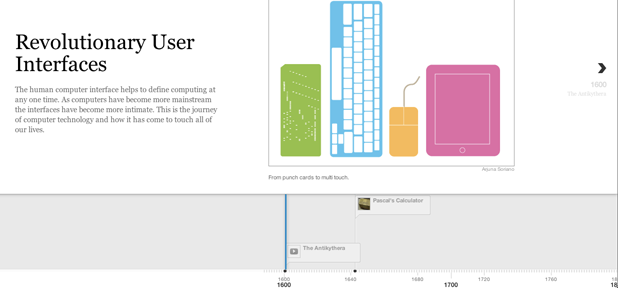
 

Check out the user interface timeline.

It appears to work well with twitter, youtube, flickr and a few others. I’m planning on playing around with this as a way of communicating some of the qualitative data I’ve collected over the last year or so. It’s a shame there’s no interface (beyond a google spreadsheet) for building your own timeline; I imagine this to be a very powerful story-telling tool if provided to the right people, and with easy access to the media objects they care about. Of course, some kind of location integration would be nice too.

As a side note: I find it really interesting that even something that’s been traditionally technically inclined – like an open source project – uses phrases like “beautifully crafted” and “intuitive to use”. Does it represents a shift of focus towards user experience and design, or is it just a healthy dose of Apple-isms? 
Paper Giant

At the start of the year,Reuben and I decided to finally start working on some ideas we’ve had for a number of years. We’re both working on PhDs that overlap in strange and mysterious ways, and we think we know a bit about solving those particular problems now.

So, we started a company. We’re working on our first OSX application that aims to solve some of the problems we’ve come across in our research, and somehow, amongst all the phd writing, we’re making steady progress.

If you’d like to be kept up to date, check out our website or follow our twitter account (@pprgiant).

Ugandan life

I stumbled across a journal I kept from my trip to Africa last year. It’s made for some great reliving in my jetlagged state this morning. Here’s my favourite excerpt:

Godwin grew up on one of the larger islands in the lake, and he still lives there. He’s just completed building his first house, and lives there with his mother and two sisters. He has a canoe made out of a eucalyptus tree that he uses to get to and from work – about an hour paddle in each direction. He told me he’s planning on marrying soon, as soon as he can afford a good dowry for his girlfriend. He said he’d like to pay 4 or 5 cows and the same number of goats, but that it was difficult to save enough money to buy the animals. Wealth matters in your family life here – he told me his father was wealthy, and as a result was able to afford 18 wives. Unfortunately, this spread his father’s fortune very thin and Godwin himself was not left with much when his verile father died at the age of 96 after fathering about 80 children. I’m not sure I believe him or not – I told another one of the staff members here about it and he said he’s going to find out if it’s true. The fact that it’s even remotely possible seems other worldly to me. Polygamy seems very common in Uganda – the muslim influence – but Godwin and I both agreed that one wife was enough.

Having just arrived back from another trip through Europe, it’s highlighted the value of keeping a journal like this as a record of the sites, sounds and most importantly, the people you encounter. It’s worthwhile keeping a journal in the context of a PhD too – there seems to be a lot of encouragement for including some reflective writing in a thesis these days, and if it helps me get to the word limit I’m more than happy to do so!

Some unexpected inspiration

Last week I attended MobileHCI 2011 in Stockholm to participate in the doctoral consortium – a forum for PhD students to present their progress and gain feedback from more experienced researchers (i.e. oldies). It was one of the best experiences of my now two years (eek!) as a PhD student. I got great feedback, and left feeling inspired and encouraged. Thanks to the panel of advisors for making it a very rewarding experience.

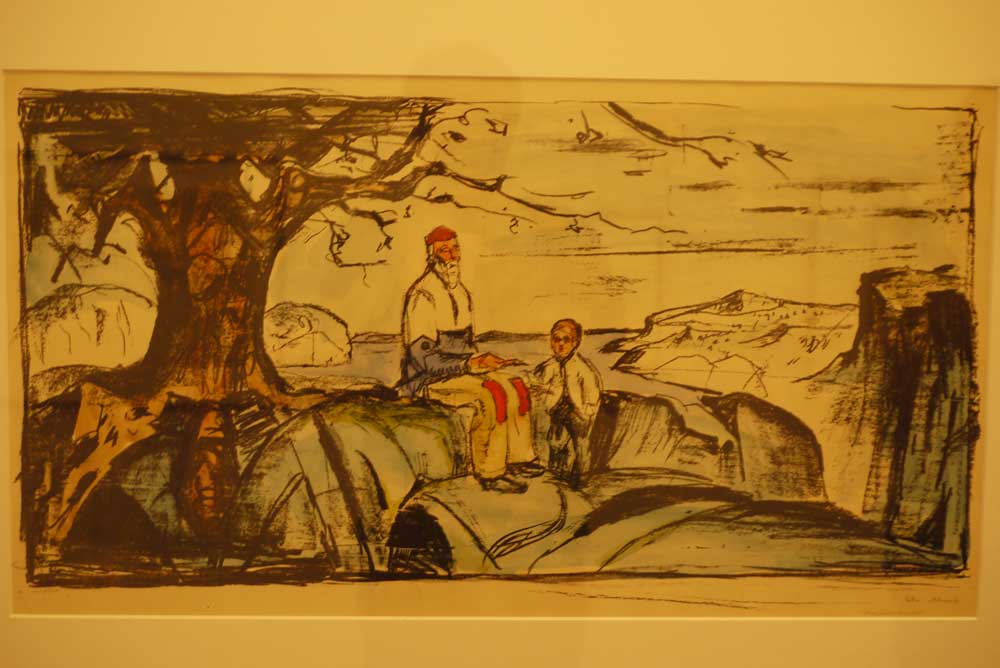
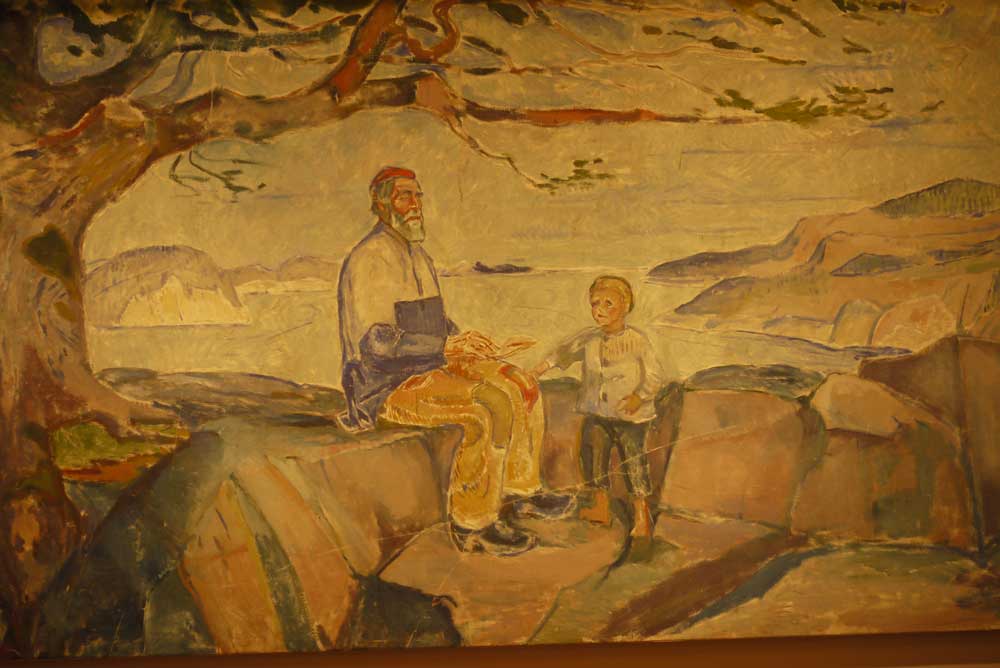
The doctoral consortium and subsequent conference were not the only sources of inspiration on this trip, however. After heading to Oslo to visit an old friend I stopped by the Edvard Munch museum to catch a glimpse of The Scream. It wasn’t on display after all, but had been replaced by an exhibition focusing on the creative process behind the paintings.

For each of his major pieces, Edvard went through many hundreds of sketches and variations, playing with the composition, colours and materials. He even went as far as painting many “final” pieces with slight variations and choosing between them. I never knew, but there are multiple Screams in existence – the painting shown here (“History”), had at least 20 versions on display.

I know it’s been said before that creative genius is actually the result of hard work and perseverance, but seeing such tangible examples of something moving from a sketch to a masterpiece was truly inspiring. It humanised the process of creativity.

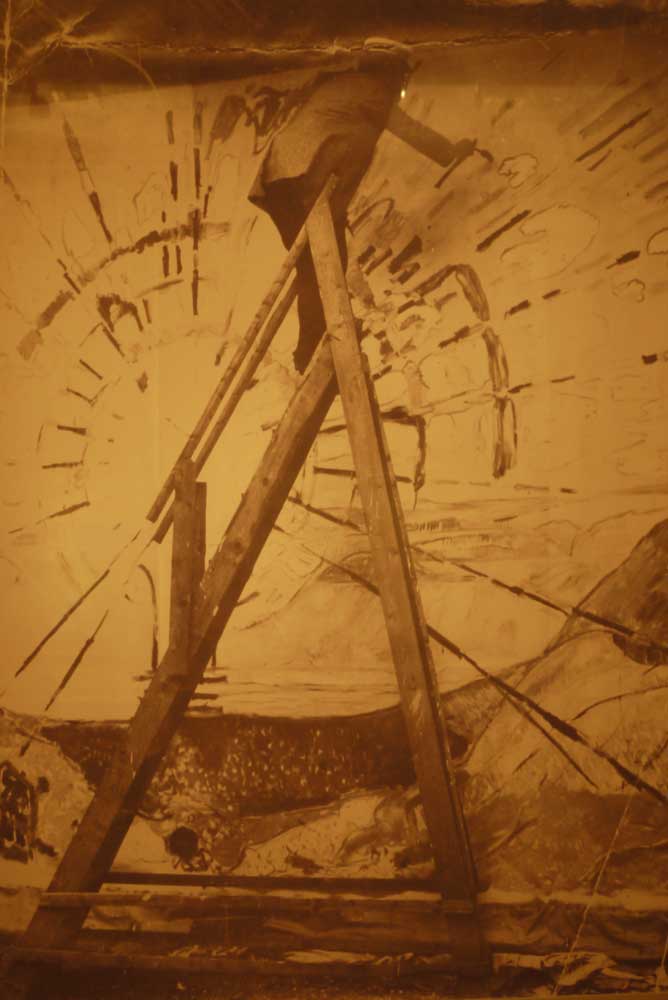
The photo below is Munch painting “The Sun”, on a very big ladder.

Another source of inspiration was the Nobel Museet in Stockholm’s Gamla Stan. It was full of quotes from laureates about the importance of ideas (especially bad ones), of failing, and of stimulating environments for creativity.

The museum is less about the individual achievements of these exceptional people, but more on what it takes to inspire a person to such heights. There are videos on the process of creativity, sources of inspiration from notable laureates, and more.

This has been a very inspiring trip, I hope to return to Scandinavia very soon.