This is an archival copy of my PhD blog, which was active between 2009–2015. I'm publishing it again as a personal time capsule, but also because I think it's an interesting documentation of the PhD process itself, which might be useful to someone, somewhere. – Chris Marmo, January 2026
“While some bodies become the carriers of health and environmental cleanliness, other bodies and embodied practices become conflated with pollution and toxicity through a slippage among environmental, social, and moral conceptions of pollution.”
“In this narrative, sex workers, drug dealers, and pornographers take over from deindustrialization as the cause of the neighbourhood’s ‘withering’ and wholesome consumption practices become its saviour. Gentrification is cast not as a turf war between working-class residents and middle-class newcomers, but as a war between sex workers and vegan restaurants.”
“People like to wax nostalgic about the “crack-whores” that once provided local colour and grit, but sex workers have been largely driven to more marginal locations. In this case, the Junction’s dirty past – industrial and sexual – is displaced onto and contained within bodies that have been driven off the streets by raw food and gluten-free treats.”
“At the same time as the neighbourhood is awash in wholesome organic food, the women here subsist on nutritionally deficient processed items. Their unmet basic needs speak to the incomplete, uneven, and unequal health makeover of the Junction. Through the paradoxical interplay of hypervisibility and invisibility, the bodies of the women who reside in the shelter are highlighted in ways that position them as ready ‘others.’”
“Even though the Junction’s eco-friendly transformation has clearly been market-based, it is important to note that non-capitalist spaces and different kinds of embodied social and consumption practices can be promoted under the eco-friendly rubric. For example, gifting, trading and bartering are popular forms of exchange; people are growing their own foods and transforming the socio-natural ecology of the neighbourhood; and practices such as yoga – despite all of its rampant commercialization – offer new ways of thinking about and materializing the relationship between the body, the city, nature and other human and non-human beings. Thus, as David Harvey asserts, the body may very well serve as a site for capital accumulation strategies, but it is also a powerful locale to look to for resistance.”
And what did David Harvey assert, exactly? The article referenced above is:
“As a ‘desiring machine’ capable of creating order not only within itself but also in its environs, the human body is active and transformative in relation to the processes that produce, sustain, and dissolve it.”
“The gap between what the laborer as person might desire and what is demanded of the commodity labor power extracted from his or her body is the nexus of alienation.”
“Capital continuously strives to shape bodies to its own requirements, while at the same time internalizing within its modus operandi effects of shifting and endlessly open bodily desires, wants, needs, and social relations (sometimes overtly expressed as collective class, community, or identity-based struggles) on the part of the laborer. This process frames many facets of social life, such as ‘choices’ about sexuality and biological reproduction or of culture and ways of life even as those ‘choices’ (if such they really are) get more generally framed by the social order and its predominant legal, social, and political codes, and disciplinary practices.”
Quoting Lowe, Harvey continues:
“Lifestyle is the social relations of consumption in late capitalism, as distinct from class as the social relations of production. The visual construction and presentation of self in terms of consumption relations has by now over-shadowed the class relations of production in the workplace… [Consumption] is itself dynamically developed by the design and product of changing product characteristics, the juxtaposition of image and sign in lifestyle and format, and the segmentation of consumer markets.”
And so, human bodies are seen as an “internal relation of the historically and geographically achieved processes of capital circulation”, where workers are encouraged to submit to the market in order to achieve a wider range of choices (by accumulating capital for themselves) which are reflected in bodily practices, whilst at the same time being encouraged into certain conceptions of lifestyle, consumer habits and desires, which ultimately makes compliance to the system more easy to achieve. A double bind.
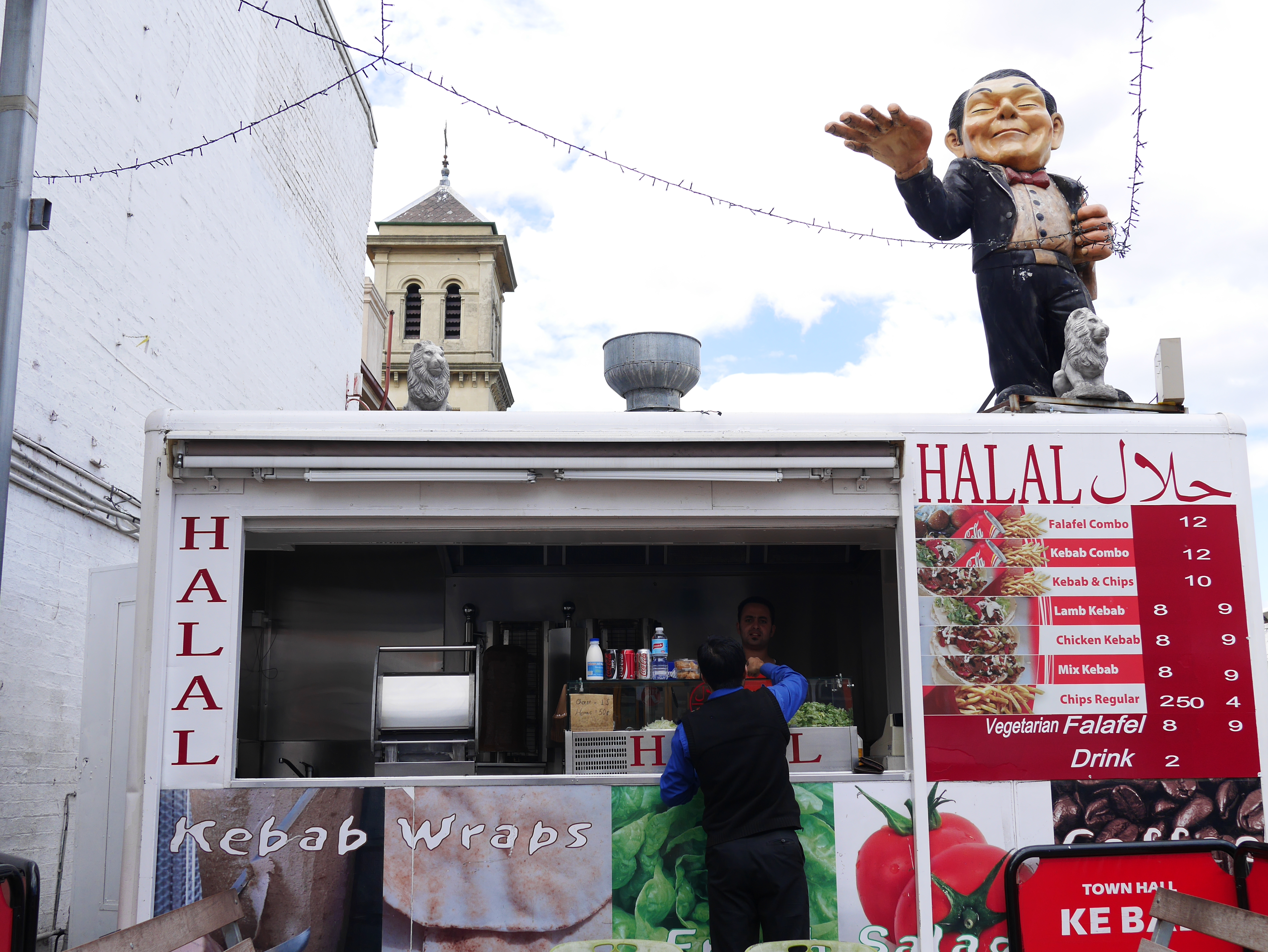
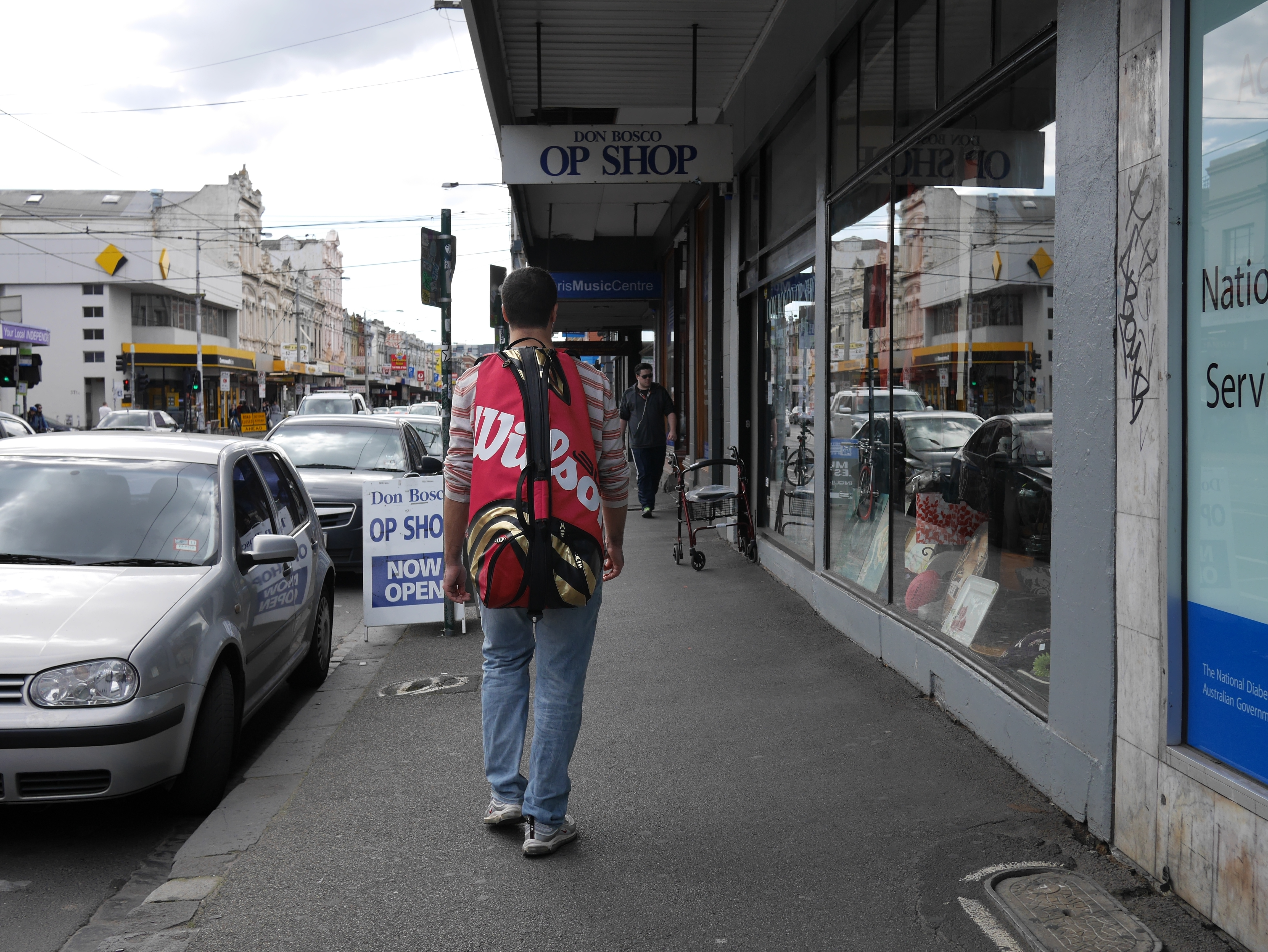
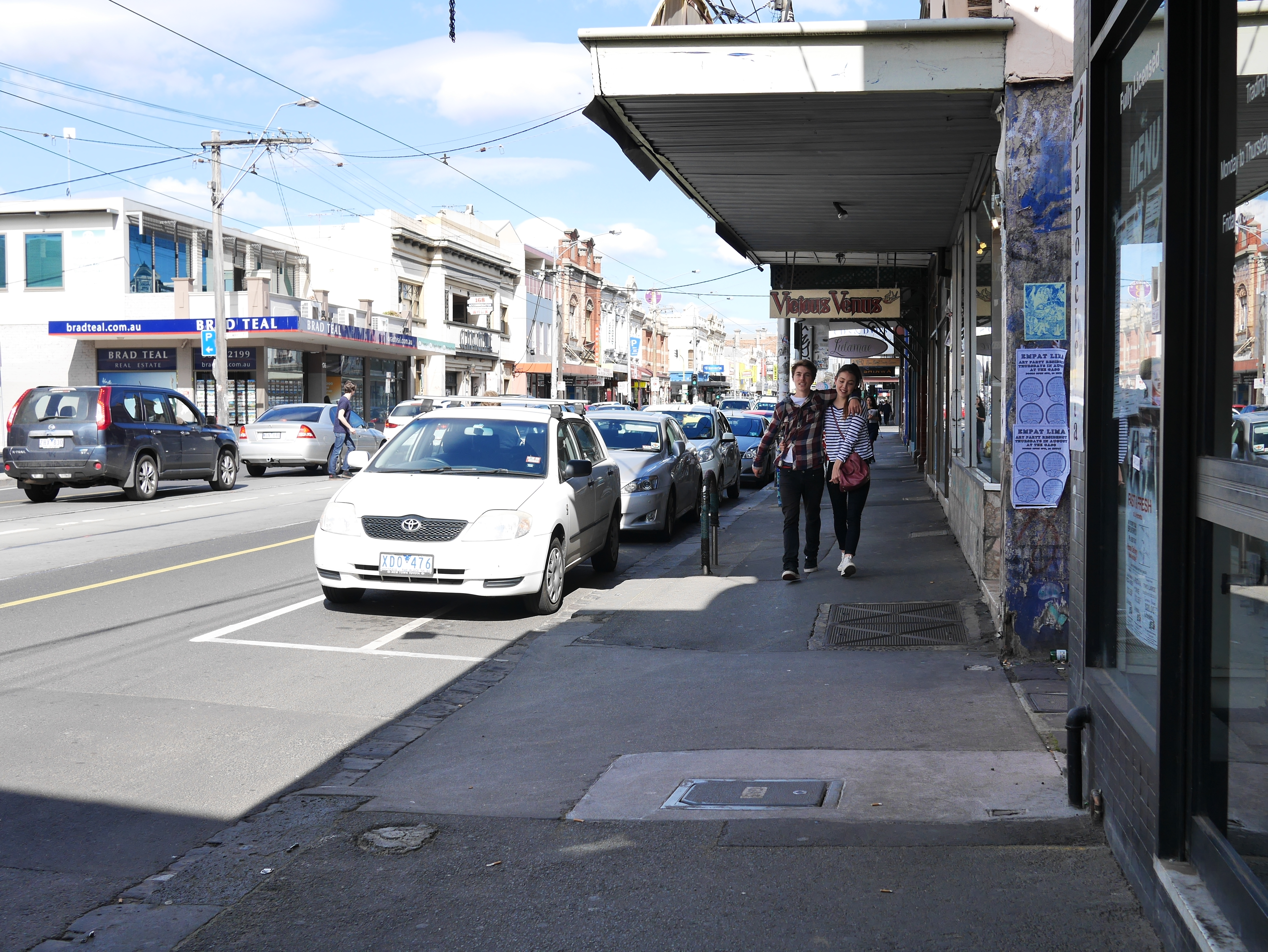
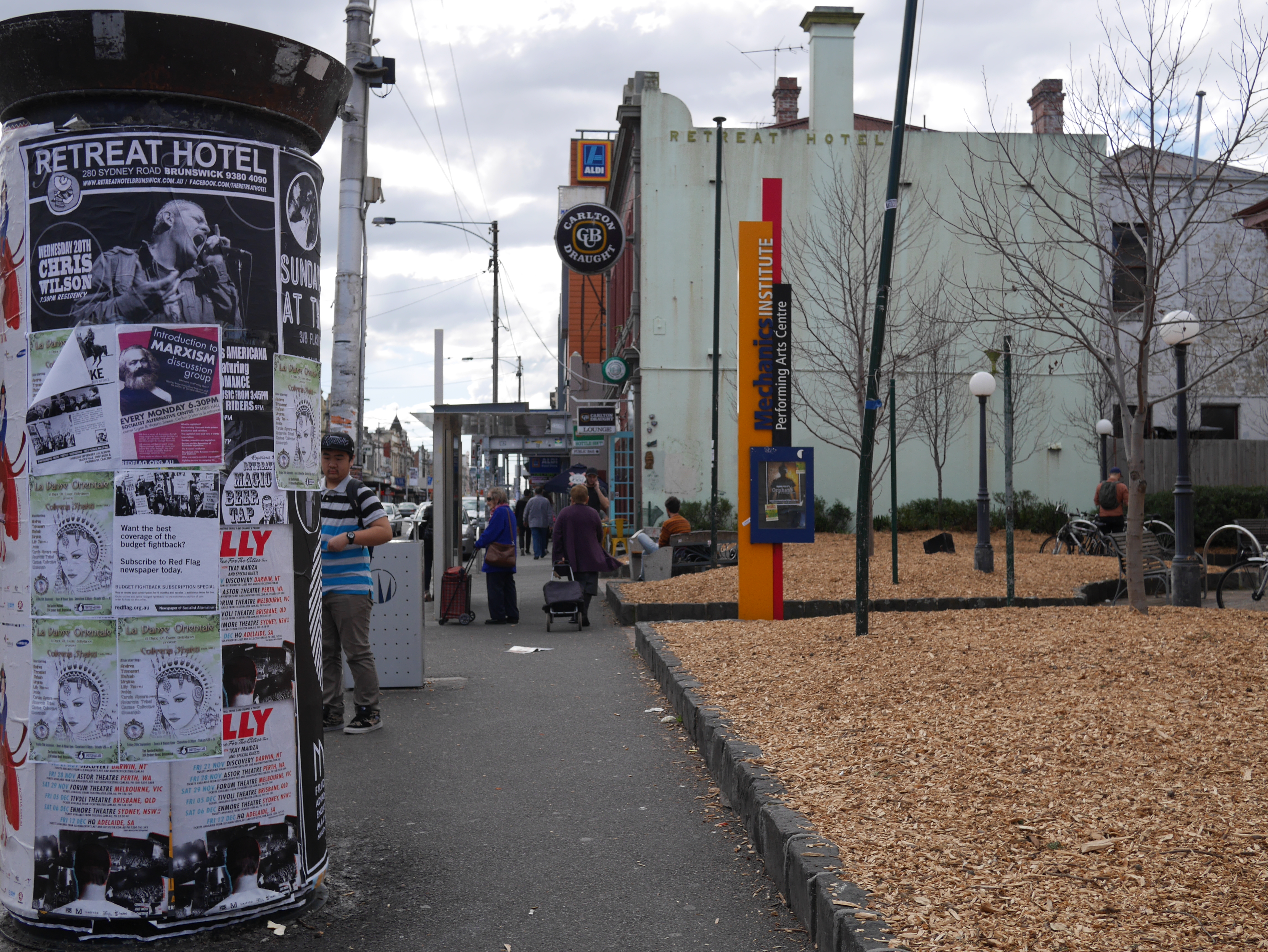
Walking down Sydney Rd, Brunswick on a Saturday afternoon is like being in some interstitial space – you’re aware of the Friday night that has past, and the Saturday night to come; aware of who’s there, and who isn’t. The weird kebab stand cleans the night off itself and waits for a fresh batch of drunken revellers. Those citizens not likely to be seen participating in the nighttime economy move about between their weekend exercise routines, op-shops and Italian food wholesalers, stocking their pantries for the week ahead. The street’s layers of gig bills and other material debris curl up towards you and point, spilling over their boundaries and each other, vying for your attention.
The people here are working to maintain a kind of order, an order that will be deliberately disrupted in a few hours time. It’s this maintenance, this boundary work, that sets the stage for other lives, and other spaces. If you look at the ways in which the street blurs its edges, you can see these lives and spaces bleeding through.
Wayfaring is a term borrowed from Tim Ingold, who describes it as a way of moving along a way of life. It describes a way that places, and lives, are continually acted out through movement. This series of posts is a way of combining visual ethnography and writing to come to a different kind of understanding about places. It’s also an excuse to use my camera.
Melbourne’s grid lends itself to parallel journeys – for any direction, there’s a cobbled thread of adjacent alleys that present themselves as alternatives. Unlike the main thoroughfares with their panoramas of action, the alleys are portholes that let only glimpses through. Yet they have their own action too. Light permeates the forgotten side of infrastructures to reveal new frames. Shift workers leave their desks, relaxed into the anonymity and rhythms of nocturnal labour. People, like the city, move.
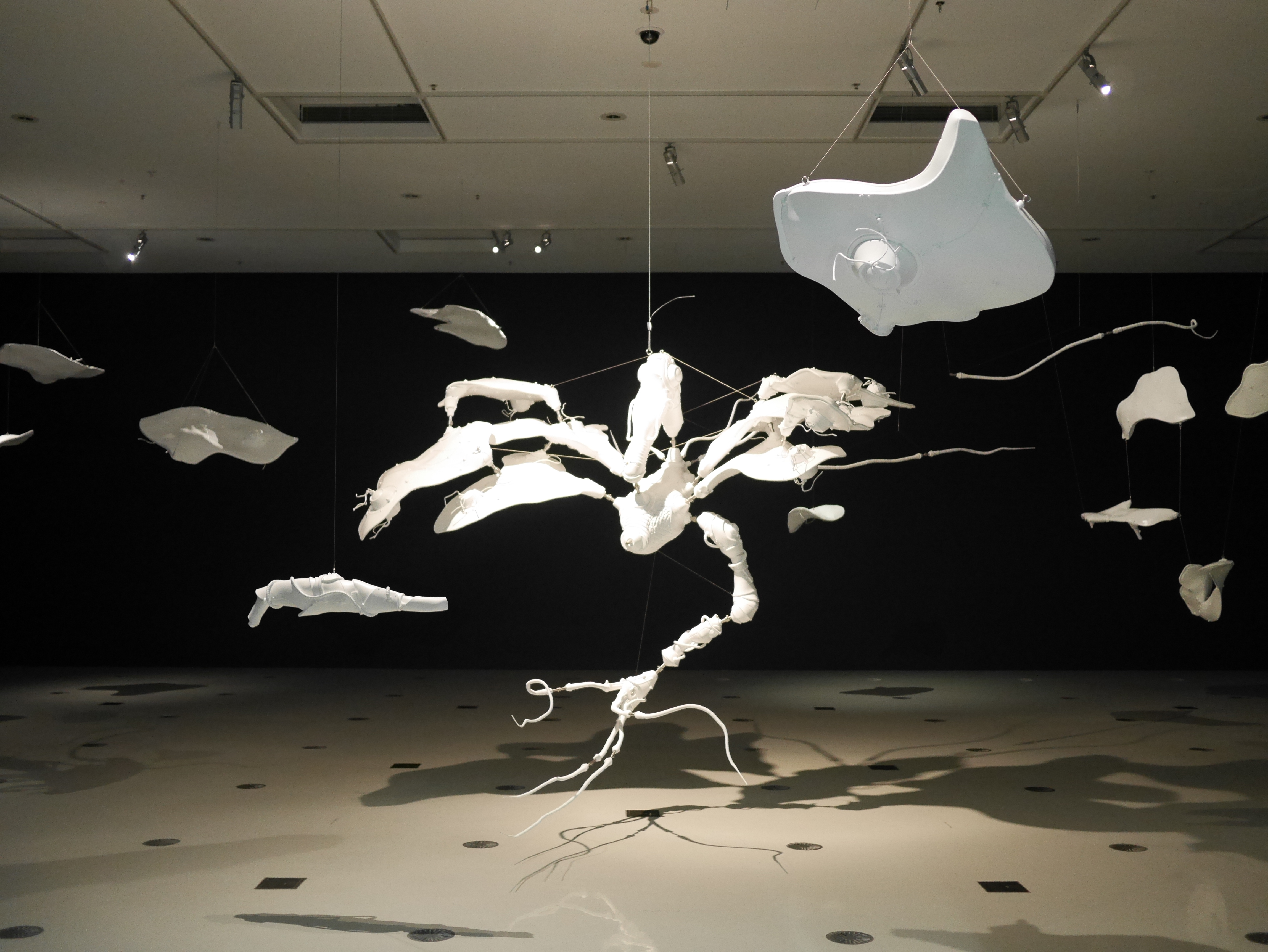
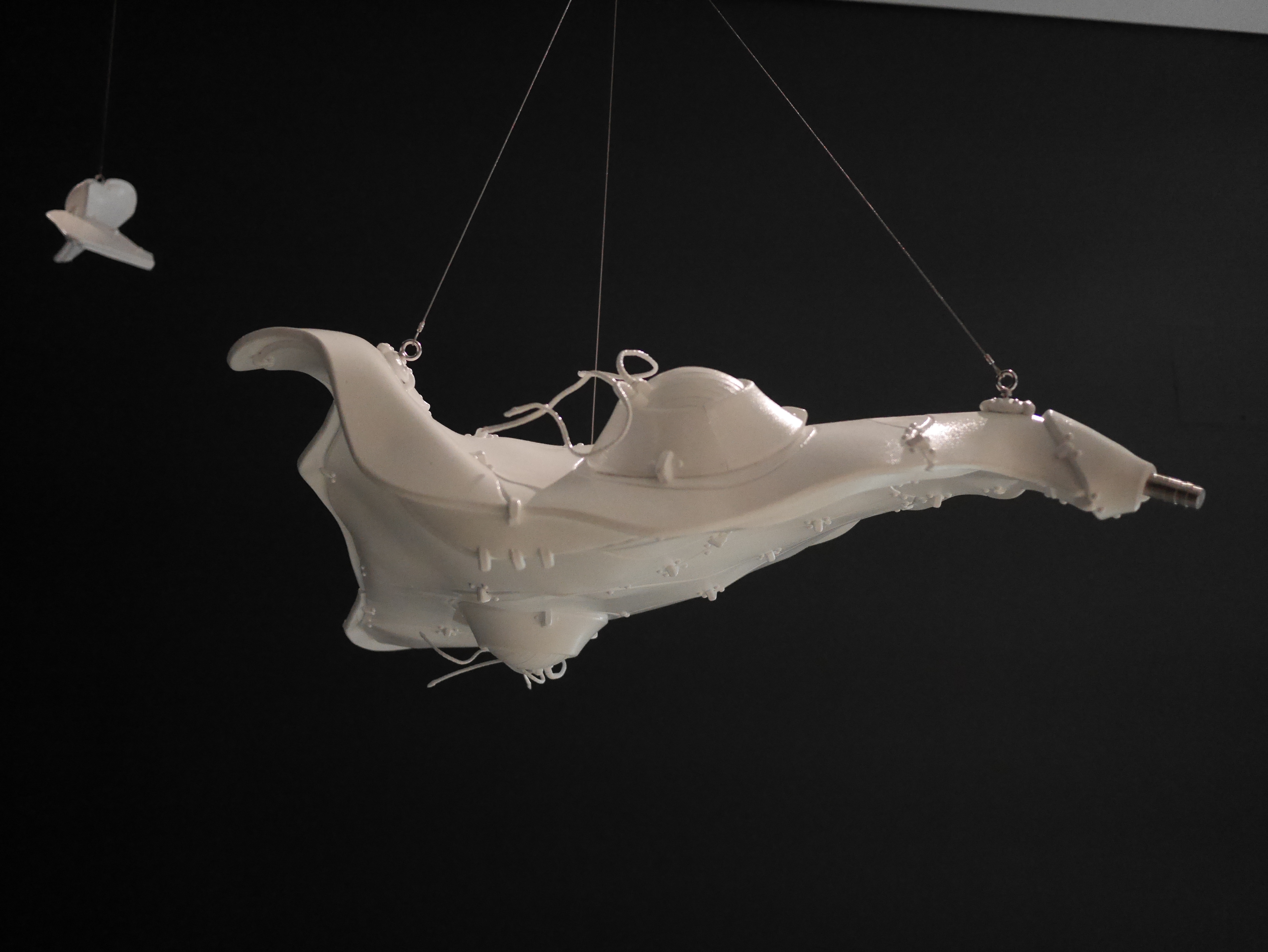
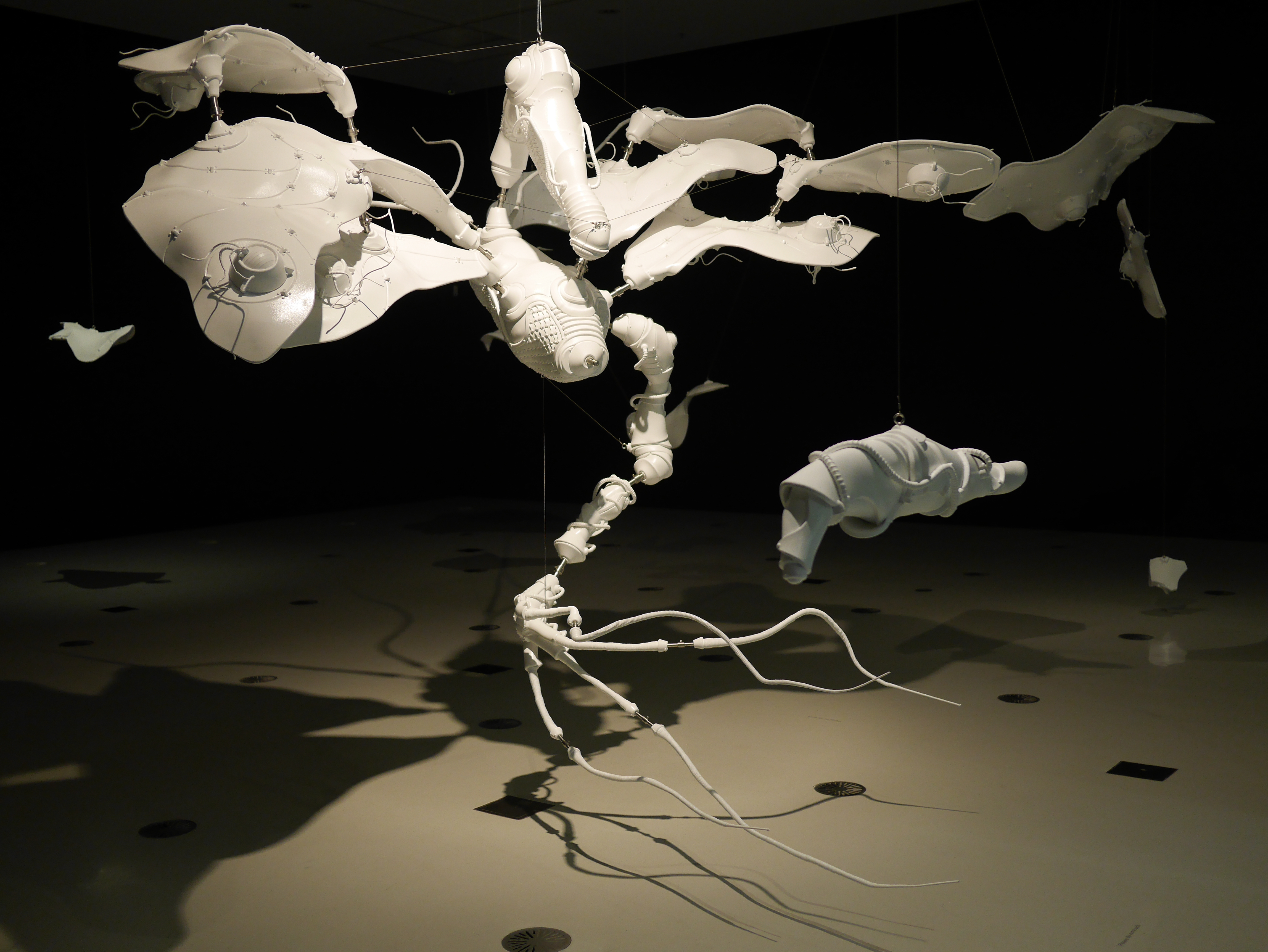
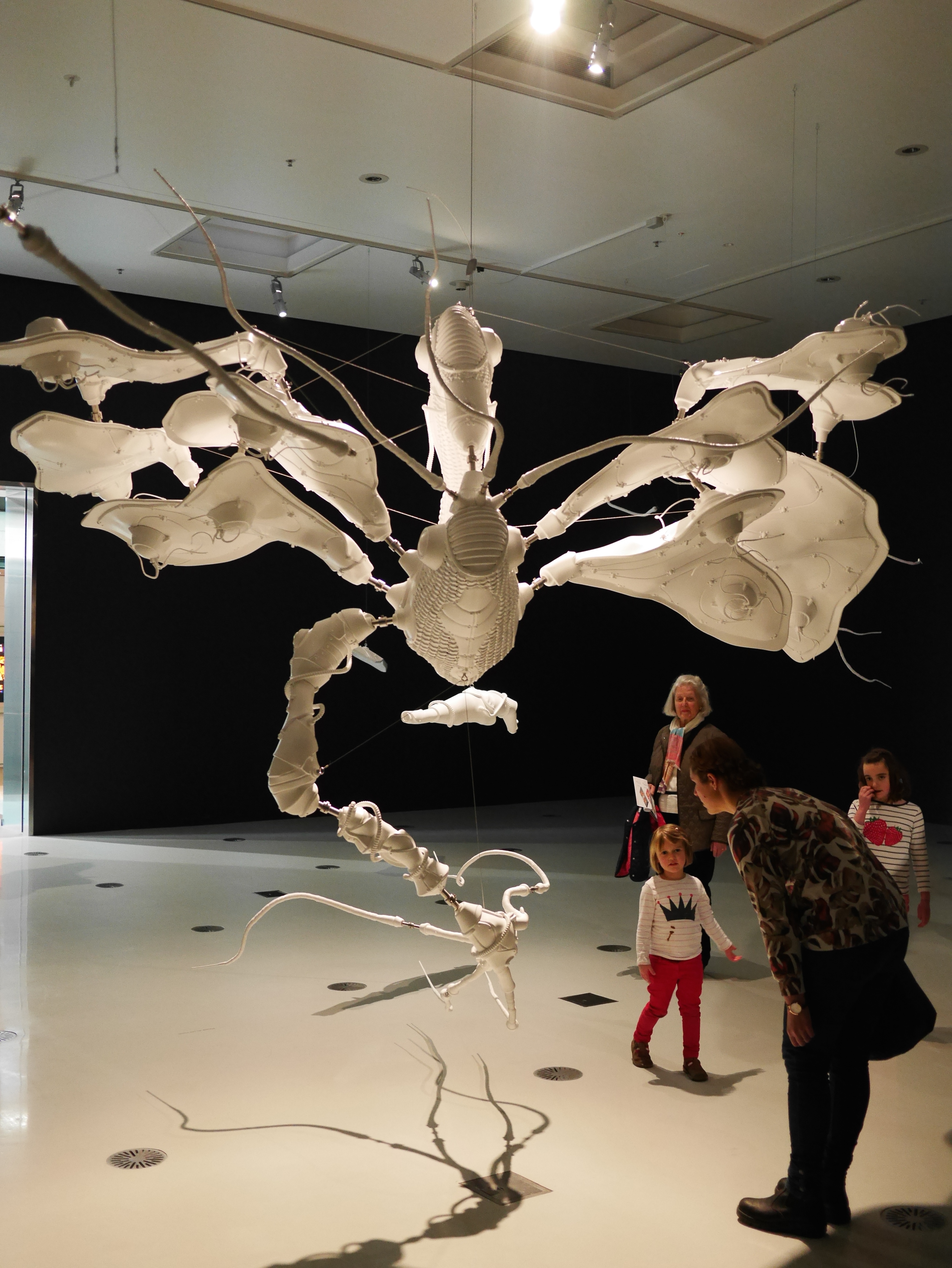
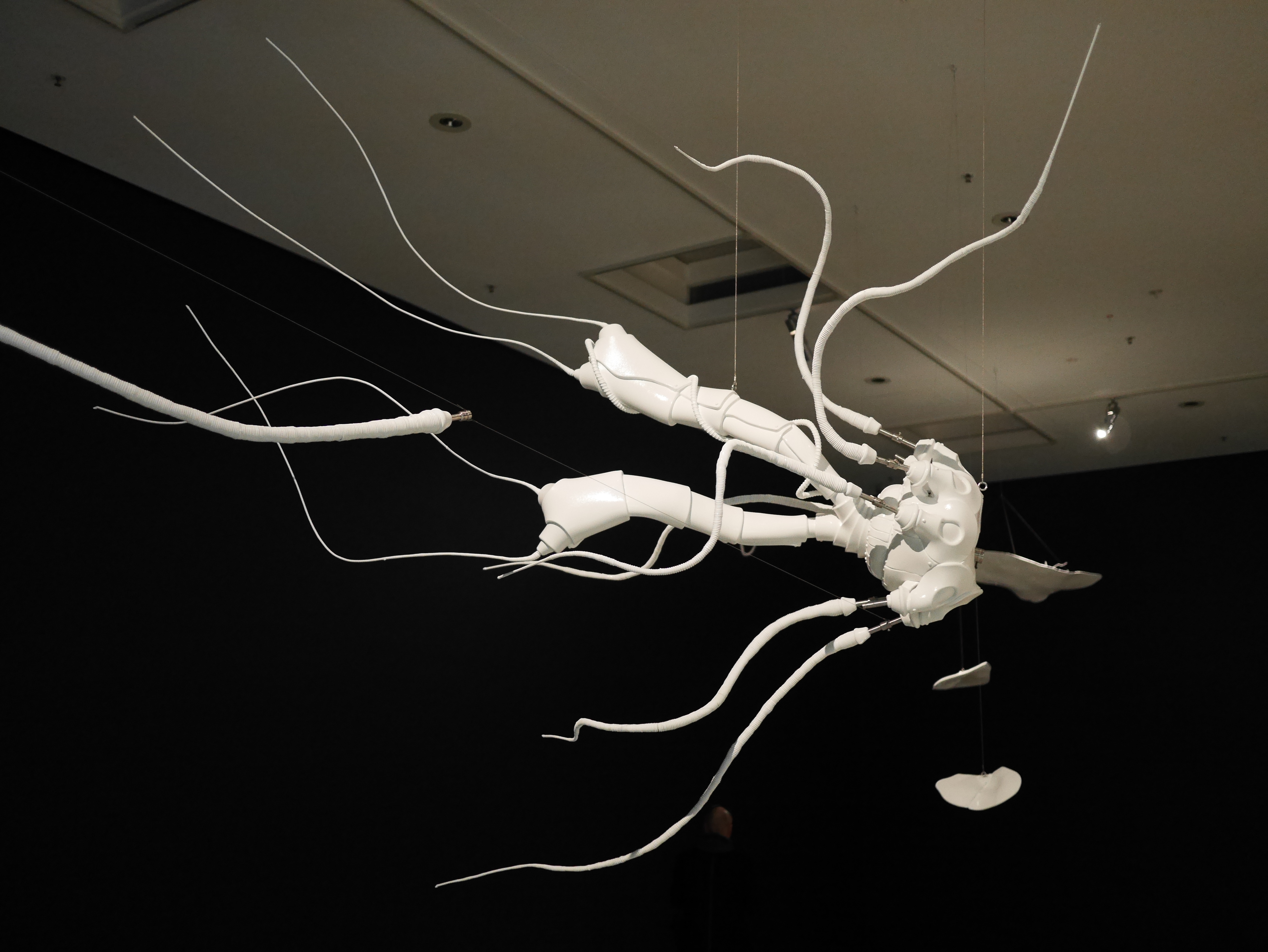
The NGV has a ‘late modern’ exhibition on at the moment, with Lee Bul‘s Untitled 2003 the centrepiece. We saw it today, stumbling upon it after a section on 1960s fashion and furniture design. It was like finding yourself thrust into a frozen scene; an observer in the deep ocean, watching some horrible creature try to piece itself together. Cyborg, but weirdly organic. An uncanny valley of floating enamel. I loved it!
The first time I went to Sydney was as a 12 year old. It was 1995. My family had driven from Melbourne to my uncle’s farm in the Blue Mountains, a regular trip when I was that age and one that usually meant a stay of at least two weeks, because it was bloody far. The drive would take all day – we’d leave at 4am, stop in Albury for breakfast and Bowral for lunch, and we’d roll down my uncle’s driveway just in time for a late dinner. My uncle had an acreage which he ran as part hobby farm, part horse stud, and my sister and I would basically chase chickens and avoid the horses whilst my mum and dad caught up on family gossip and (more often than not) helped my uncle with his latest home renovation project. One of those trips – the 3rd or 4th in a row, and after we’d done everything we could think of in and around Lithgow and the mountains – my uncle suggested we get on the train and make a day trip to Sydney (“pop in to town”, as he called it). I remember being excited, partially at the prospect of seeing Sydney itself, but mostly, I think, at the thought of the long train ride through the mountains.
We left early, and made it into the city by mid-morning. The 3-hour trip was probably amazing but I remember little of it now – I only remember the arrival. I remember the train coursing through the western suburbs and slowing as we entered the city, my strategically selected window seat allowing me to take in the unfamiliar skyline of spires and glass before we eased into the large, welcoming terminus. Central Station was spectacular, with it’s sweeping arches and bronze, glittering clocks; it felt like a proper destination, an arrivals hall. Train stations, in Australia anyway, are rarely the cavernous wonders they are in Europe and elsewhere; as pieces of infrastructure, they are local hubs and transit points, somewhere to pass through on your way to somewhere else, less interstitial spaces and more nodes in a network. As buildings, they’re rarely more than a plain brick box with platforms either side. However, I remember Central Station being distinctly different from any of the stations I’d been to before. Whilst Flinders Street in Melbourne is iconic in its own right (and for different reasons), it doesn’t have the same feeling of grandeur as Central did (and does). The name alone – Central – conjured up associations to more significant, more global places. New York’s Grand Central is the most obvious. Of course, Australians would never be as audacious as to label something ‘Grand’ (unless referencing some kind of giant fruit in a country town), but even the word ‘Central’ conveyed a sense of self assurance and confidence that I hadn’t found in Melbourne’s buildings or in its naming conventions. It certainly had utilitarian connotations, positioning it at the centre of city’s transport system and indicating its usefulness as a starting and end-point, but more than that, it hinted at the assuredness that Sydney had. It positioned the Station, for me, on a slightly more global stage; the name, and its grand arches, were indeed the closest I had been Grand Central, St. Pancras, or Gare du Nord. Central Station took me to those places in ways that Flinders Street station didn’t.
That, and they had double decker trains!
And of course, on that trip, I remember seeing the Harbour Bridge and the Opera House for the first time. Walking down towards Circular Quay with my uncle leading the way, my parents and sister and I in tow, emerging from the edge of the city to that stunning harbour where every angle was a postcard in waiting. I do remember thinking the Opera House, the Bridge and the water were amazing, but I remember more strongly the moments of anticipation before it; my sister and I nattering excitedly, trailing behind the adults or sometimes dashing in front; mum and dad revelling in that same excitement; my uncle enjoying his role as tour guide. It was that affect of anticipation we inhabited that day that has come to define my first encounter with Sydney. That, and those grand, Grand structures.
Since that first time I’ve had at least a dozen trips back; as a young University student, fresh out of high school, embarking on one of my first ever solo trips; as a “young professional” years later, day-commuting up for work and feeling exhilarated to be thrust into this modern working life (and when I thought travelling for work was glamorous -numerous 6am flights account for that pretty quickly). There’s been weekend trips to visit friends who’d moved there for love or jobs (the love of a job? or sometimes just for the weather). There’s also been countless transits spent at the airport, where odd specimens of men roam; wearing rugby jumpers, orange tans and shorts in winter . Each of these visits, these touch points, added something more to the place, accumulated layers of meaning within its streets and the people there. Each one mingled with my own slightly tenuous, childhood affective connections.
But there it’s always been – Sydney. Strangely different to my home city, it’s streets somewhat anonymous, differently alive and less legible to me, but yet acutely aware of its order in the world; Australia’s post card city, it’s global, smiling, bleach-blonde face.
Fast forward to a few weeks ago, and I had a chance to visit Sydney again. It’s been a few years since I was last there; my partner had a work trip booked, and with a bit of free time up my sleeve I decided to tag along and enjoy the hospitality of her already-paid-for hotel room. It was mid-week and I was largely left to my own devices, and so I wandered the city with a few vague plans spread across 3 days, equally interested in figuring out the train network again as in actually going somewhere; looking forward to seeing a couple of old friends but taking my time getting to them.
Despite my novice ability to actually read the place, Sydney to me has always felt like a city in action. It has always seemed busier, more hectic than Melbourne, and even after I had spent a few years in Tokyo, Sydney always had a pace that is uniquely fast, uniquely its own. Tokyo might have its scramble crossings and network of cities-within-cities along the Yamanote line, Melbourne its plodding trams and flash-mob sports crowds, but Sydney has its bustling roads and twisting streets, it’s unpredictable terrain, it’s busy skies, and it’s mishmash of transport modes.
I’m always struck by this busy-ness and its qualities – the hustling buses (not to be confused with bustling hussies), with their screeching breaks and decompressing suspension systems, commercial and commuter cars skirting between these hulking beasts, the whole cacophony moving through it’s spaghetti tangle of a business district that rises and falls at a whim, darting left or right in the blink of an eye. On foot Sydney sounds foreign, closer to Saigon or Singapore than Melbourne. It feels different, too. Unlike Melbourne’s largely flat and inherently knowable Hoddle Grid, Sydney twists, turns, dips and rises; its sky-scrapers reach higher because their own foundations are higher, and as a result you feel deeper in it. You’re never quite sure where the street will take you; what a particular glance will reveal; what will be over the hill.
The airport is close, too; planes are regularly spotted overhead at various obtuse angles, circling and then disappearing behind the silhouette of a building. Helicopters, blimps and other craft hover across the sky. And of course, on the water, ferry’s spray across the Harbour, delivering literal boat-loads of people to somewhere otherwise painfully inaccessible, all whilst yachts and their orange-tanned owners linger, pose, look.
This procession of action has always been a combination of its transport networks, terrain, improvised urban design, and a commerce focused aspirational culture that never quite made it to Melbourne (in my opinion, although that might be changing). However, on this most recent trip, I felt like the bustle had risen a notch, and had perhaps gained a more subtle quality. The Sydney Bienalle was in full swing the week I was there, as was Vivid Sydney – a cultural “festival of ideas” that doubled as a night-time projection light show. This time, I wasn’t just in the action of Sydney-per-usual, but configuration of flows and landscapes that was new to me.
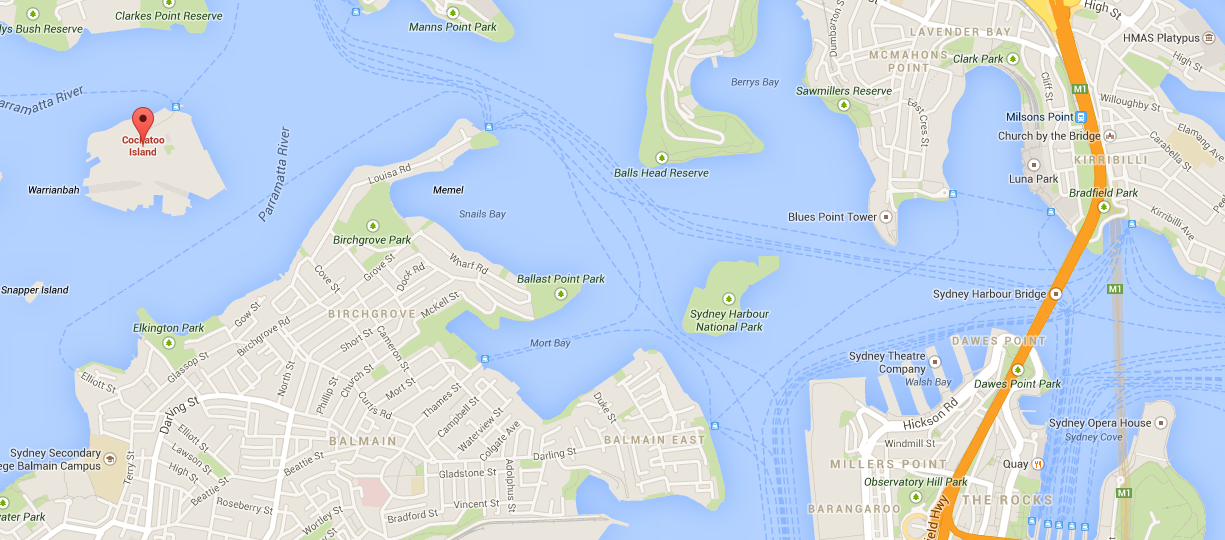
On my first day there, after flying up in the morning and basking in the 10-degrees warmer weather, I decided to head out to Cockatoo Island to see some of the Bienalle. Our hotel was in Kings Cross, and so I worked my way along the train system towards Circular Quay – that same place my uncle had guided us towards almost 20 years earlier.
I was early for the ferry and so got to sit at the Quay for a good half an hour, waiting for a boat to deliver me to the old penal colony and shipyard, now host to art festival. The waiting commuters were a mix of local students, international backpackers, and an indigenous community group accompanying some of their elder members on a day trip. Some of them slumped on their luggage, others holding hands and waiting, patiently. I heard German. French. That friendly indigenous accent I hear too rarely in Melbourne. And I remembered my uncle, who passed away last year, showing us the way to the Opera House steps.
The Ferry arrived and the kids rushed to what I assumed were the best seats (another way the city is not legible to me – which way were we going? which side has the views?) and I sat down and watched as we moved out of the Quay and around towards Barangaroo – a new development in a city I thought had nowhere left to develop. People rushed from one side to another, cameras held precariously by excited hands as the Bridge and Opera House swivelled into and then out of view. And then we skirted out into what felt like open water (but was actually heading further inland), the city receding behind us as we snaked through heads and coves, slicing around the national park (another island I haven’t been to). I was reminded of that space of anticipation from my first time in the city – the unknown twists and turns, the accelerations and decelerations, not knowing whether you’re “there yet” until that thing you’re aiming for rises in front of you.
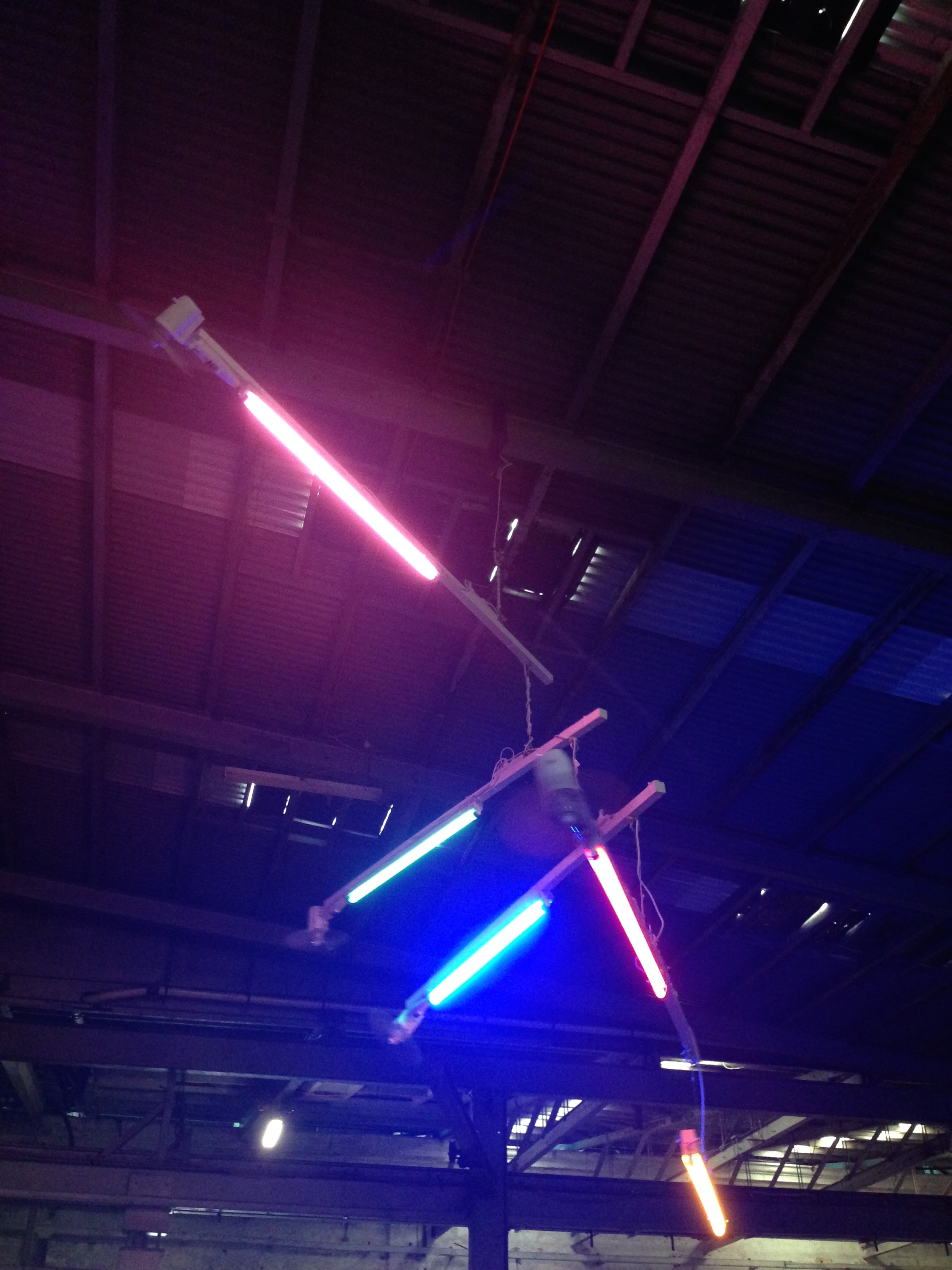
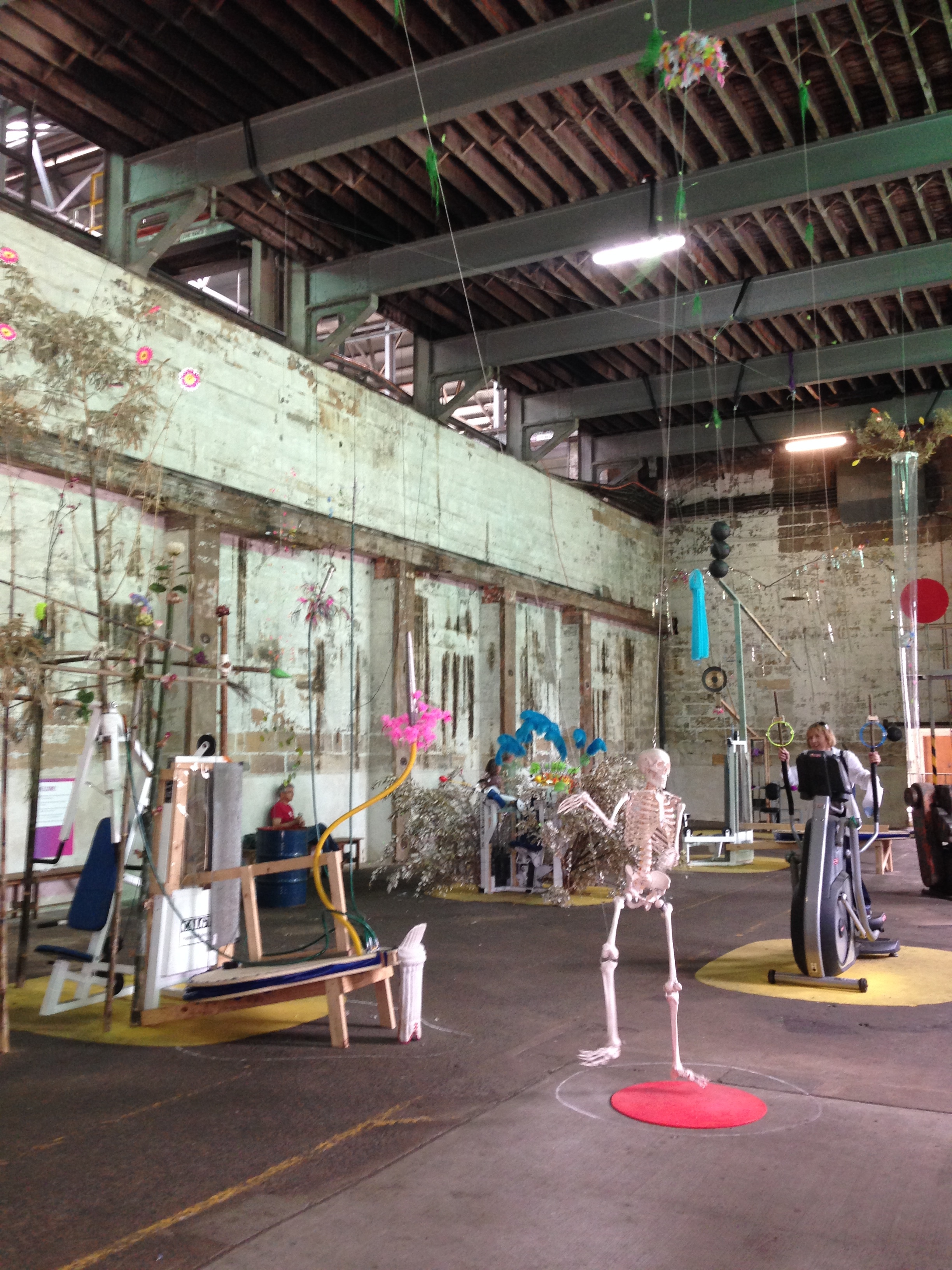
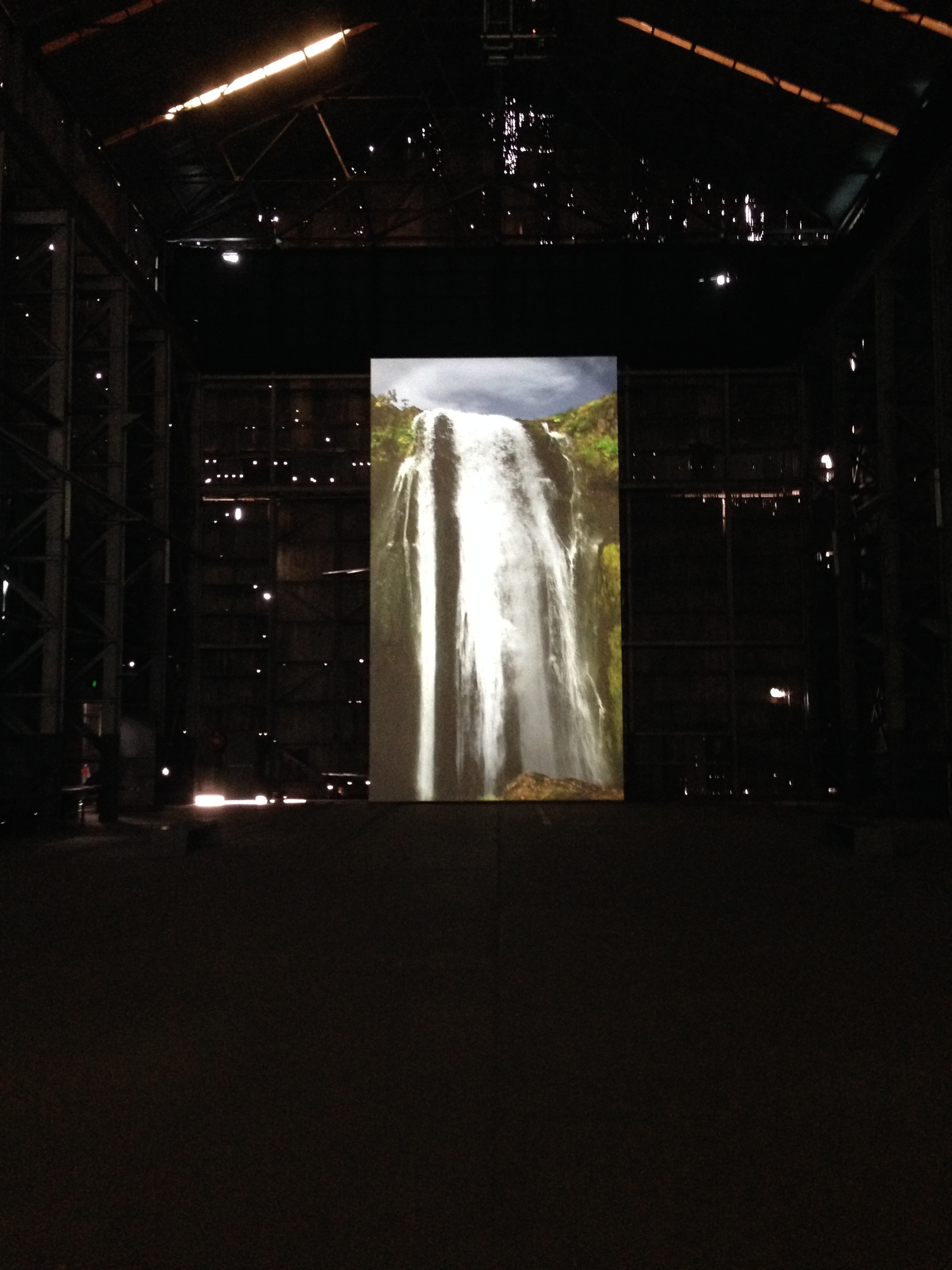
And then the island itself, full of history I had no idea about, and stuffed full of art I also had no idea about. But still, this trip was nothing if not a trip of discovery, and so I spent hours moving between the buildings, watching and noting the pieces I liked. I spent ages playing in the slightly mad Bush Power by Gerda Steiner and Jörg Lenzlinger, was delighted by the lo-fi mobile Spectra VI by Ross Manning, and felt immersed in Eva Koch’s I AM THE RIVER.
Spectra VIBush Power’s exercising skeletonThe stunning I AM THE RIVER
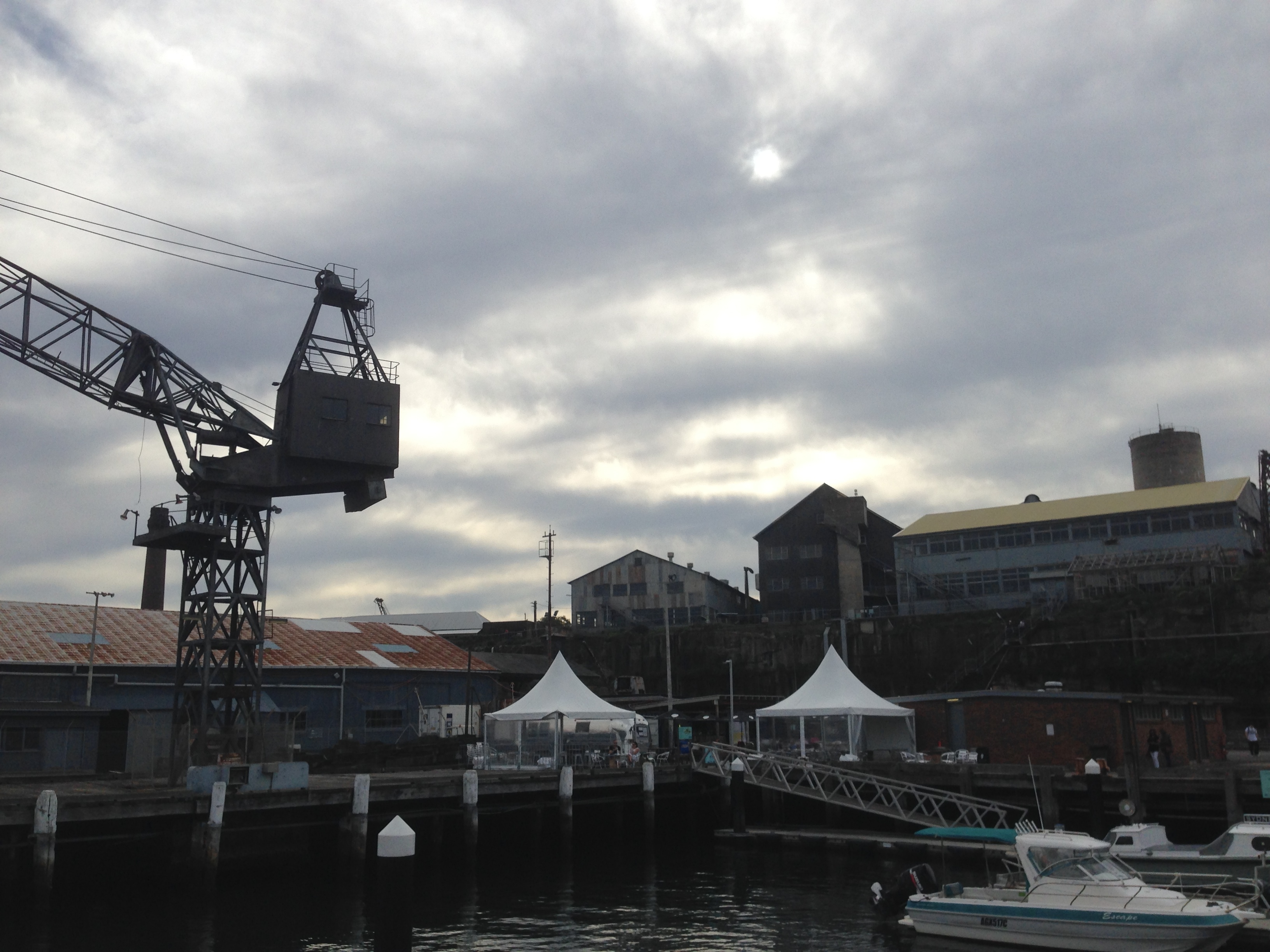
I also really enjoyed Ignas Krunglevicius’s Interrogation; a textual representation of a police interrogation of a woman who eventually confesses to a murder. It was harrowing in many ways, not least because of the piercing sounds that accompanied each slide of text. Above all though, I enjoyed roaming this old island, looking at it’s rusting infrastructure and taking in the views of privileged suburban Sydney surrounding it across the water.
The old ship dock
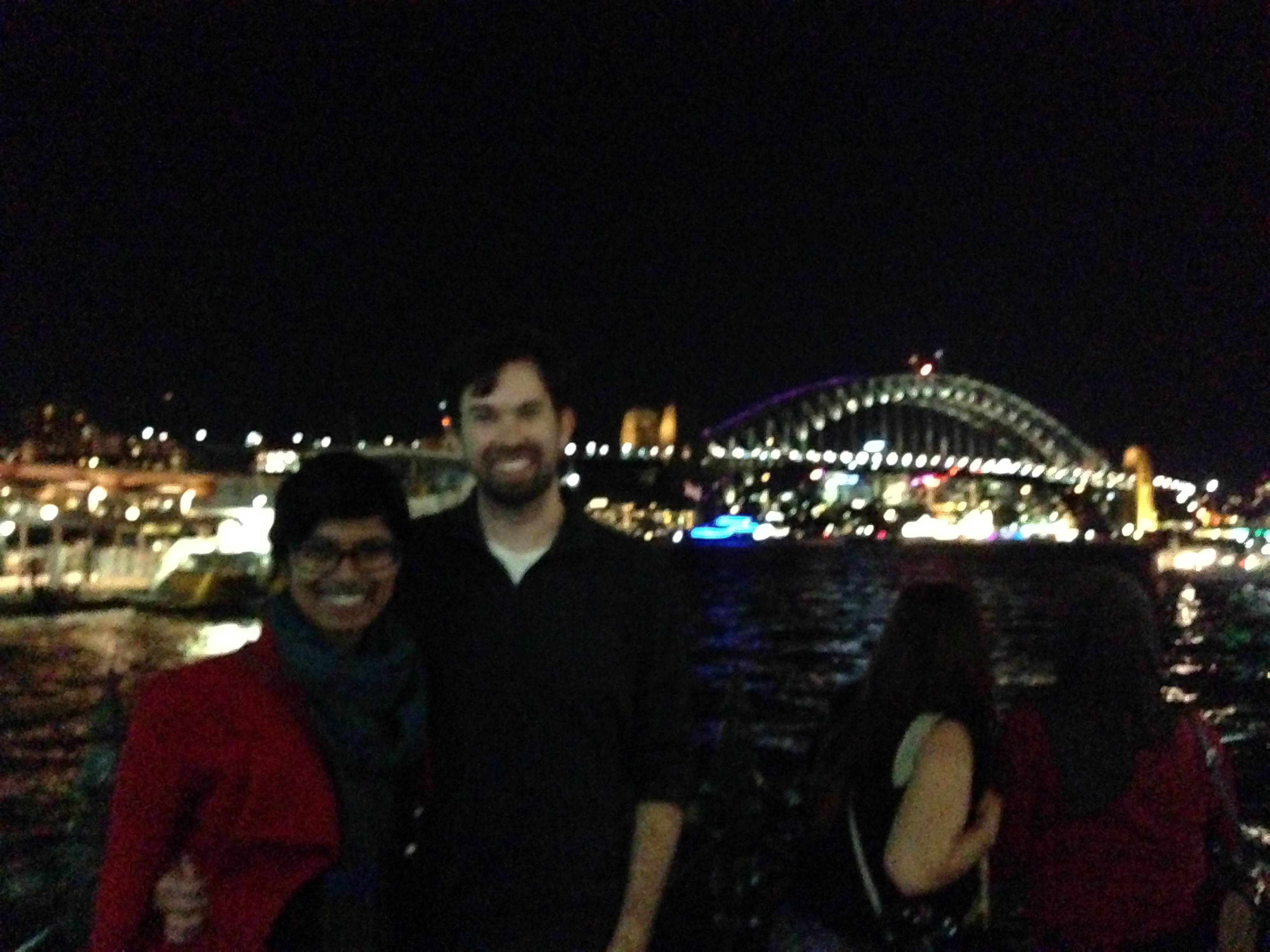
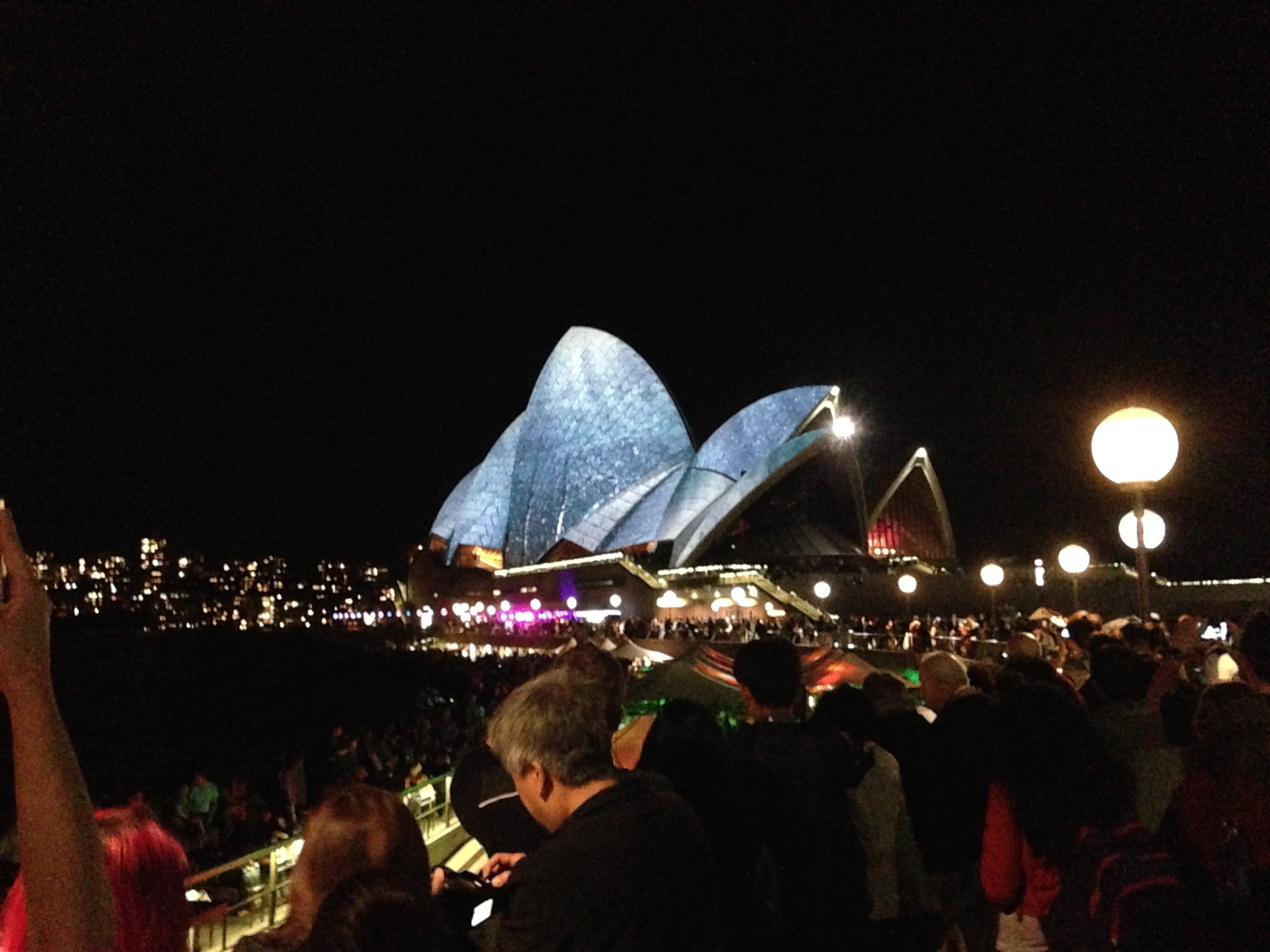
That night, when Savindi finished work, we met a friend in the city for food and trekked on foot down to Circular Quay yet again, first to check out the projection lighting but then ultimately towards another first for me: an actual show at the Opera House. The projections were good, not least because of the canvases they enjoyed, but I found myself a little disappointed at how concentrated everything was around the Harbour. Melbourne’s own White Night quite literally takes over the whole city, and I felt the organisers could have spread the action out a little more, so to speak. Still, there was some impressive sights to be seen.
We were those guys. Blurry but good!Projections on the Opera House
We made our way through the adoring crowds and into the ‘orange skin’ building itself, me for the first time. Performing in the Joan Sutherland theatre, Nils Frahm didn’t disappoint. I’ve never been great at describing music, but I know that I loved it. It was hypnotic and enthralling at the same time, and the guy was charming in a way that made me slightly jealous. He’s an amazing talent, and I’m looking forward to his shows in Melbourne later in the year.
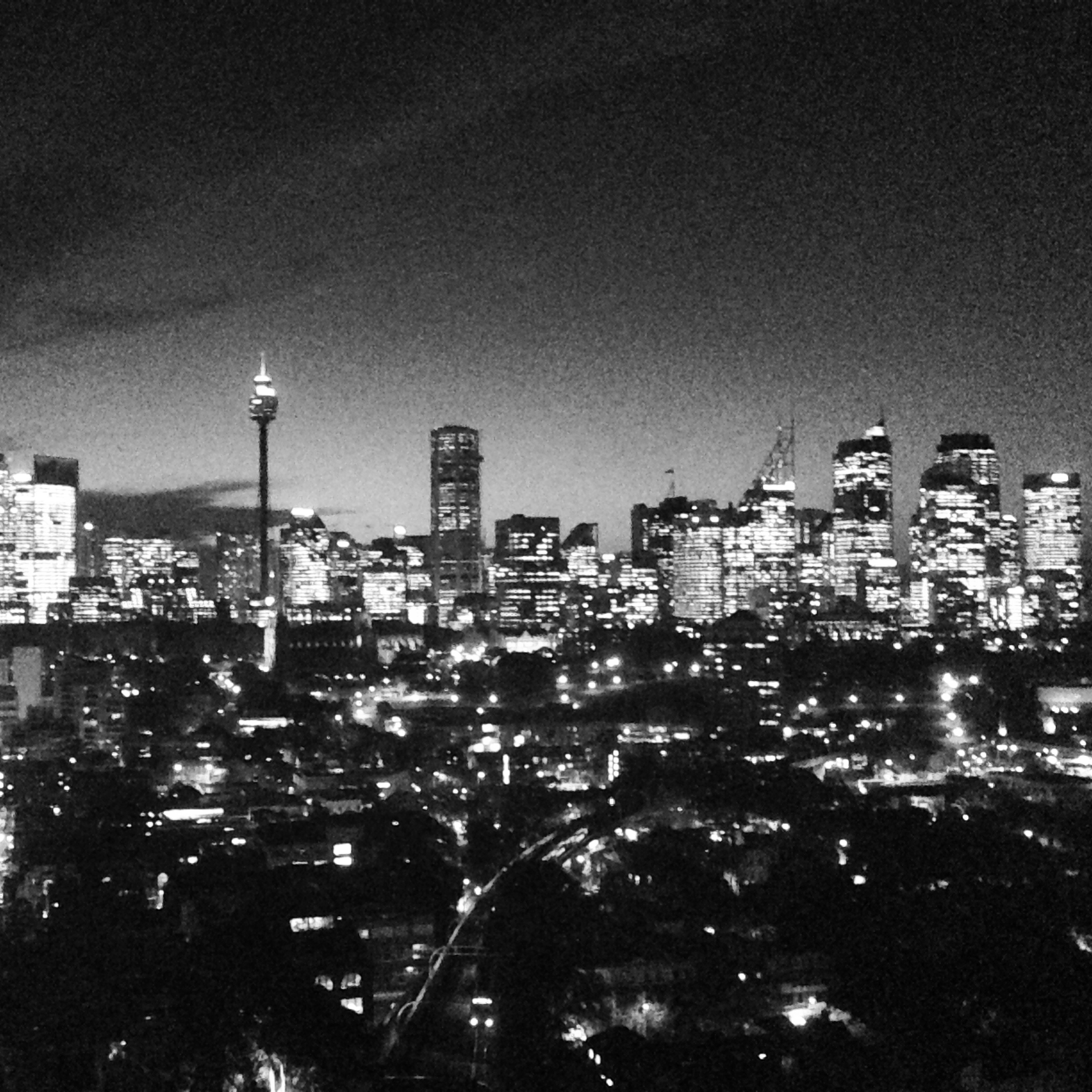
After the show, we left the Opera House and got ourselves a jaffle from a conveniently parked food truck, before making our way back to Kings Cross, via train to Town Hall and then across town on a replacement bus (due to track works). People here, too, were buried in iPads and phones, talking to each other or not, looking tired, or not. And the city again was illegible to me – this time due to the harsh reflections from inside the bus smearing the soft lights of the city. We got off at the corner in front of some nightclub, and a backpacker with drink cards for a strip joint approached me but then ignored me when she saw I was holding Savindi’s hand. Not that that should have mattered – we might actually have taken the drink if we weren’t tired. But then we went up to this view, and fell asleep.
Instagram’d Sydney
20 years after my very first visit and Sydney continues to evolve for me. This time though, it seemed to be augmenting its already considerable strengths with a different quality. It’s starting to wrangle some of that bustle and procession into something more focused, something slightly more community based. For the first time, on this trip, I actually thought I could live there. Originally, it’s ‘grand’ structures were the scaffolding for my affective experiences of the city to attach themselves to and grow. Now, I suppose I’ve had enough encounters to imagine some kind of longer-term connection to the city forming. It’s taking on a different shape; less like a postcard, more like a real place.
I could probably live there. The rain we got at home didn’t help, either.
In the many months since I submitted my thesis, I think I went through about three plans for this blog. First, I was going to archive it; to keep it as a testament to the 3 years of PhD work, another neat little package to virtually sit alongside my thesis as a tangible outcome of that period of time. I wanted to shelve it, put it in mothballs, and to make it a relic of its time. Second, I thought about coding some kind of visualisation interface to sit over the top of it, as a way of both archiving AND doing something cool with it. That involved thinking about my thesis again though, and even in a roundabout way I wanted to avoid that, and so that option has yet to transpire. Thirdly, well, I don’t really remember.
In the end, each of those plans above is brought to nought with the publication of this post. Here it is again, fresh and alive; current, and now not neatly time-boxed to pre- and post-thesis life. And so, I’ll keep posting here, sometimes sporadically, sometimes not, in the hope that whatever small readership there was is still here.
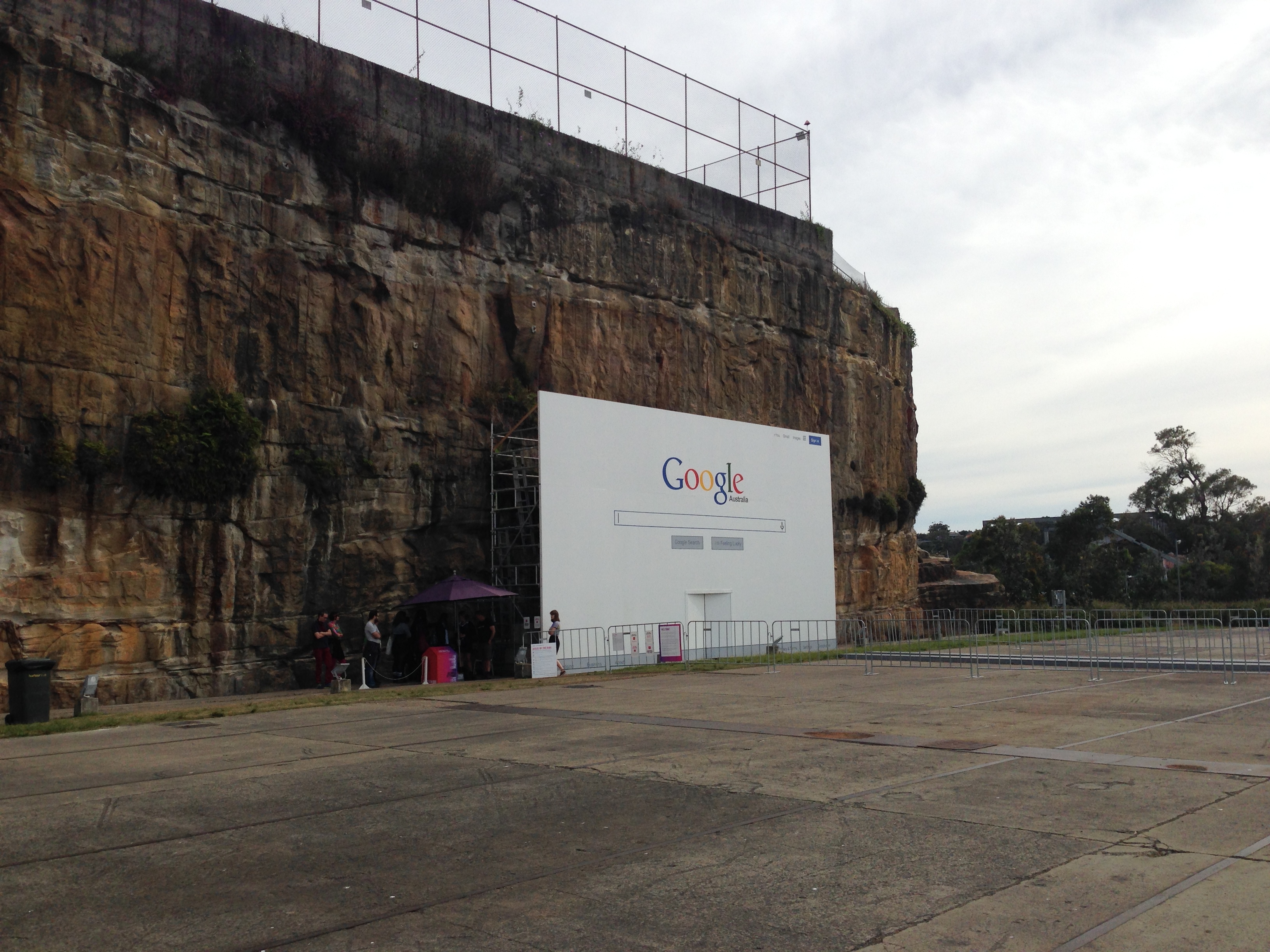
This is also the first post in a world in which Google Reader doesn’t exist. I remember looking at the meagre statistics of this blog about a year ago, and the vast majority of hits were recorded against the RSS feed. While Google effectively took ownership of and then effectively killed that technology, I hope that people have found alternate ways to keep track of sites that live outside the stacks.
So, in answering the question posed by the title of this post, for this website anyway, I suppose it will carry on in roughly the same manner as always.
As for me, I’ve been working with RMIT’s excellent Digital Ethnography Research Centre on a project that looks at cross-cultural and inter-generational mobile media use within families. It’s based in Melbourne, Shanghai and Tokyo, and is looking at differences across those sites in how families use mobile media to communicate. I took part in a workshop late last year for that project, where I “met my literature” (well, one of my key references, anyway) and some other great researchers. There are excellent people involved, and I’m looking forward to taking further part over the next year.
Late last year I also worked on a project with a large software company based here in Melbourne, which was fun and had some great outcomes, and I’m about to embark on another design research project in the finance sector. Each of these is a far cry from national parks.
However, I’ve viewed these projects as opportunities to practice some speculative design work, perhaps the topic I’ve become most interested in over the last year. This happened almost accidentally through writing, but also became evident once i’d began reading about the area and reflecting on my thesis work.
Unknowingly, I had performed some speculative design work in my thesis through the creation of the Habitat and Wayfarer systems. In these, I went to great detail to describe scenarios of use, to sketch out interaction diagrams and actual objects that could, potentially, exist within Parks Victoria to aid in park management. Throughout that design process I was always more interested in the concepts behind them than in actually making a functional prototype. I made sure my examiners knew they were not real systems. In reality, our project wouldn’t have had the time or the resources to build them regardless, but neither the examiners nor the project partners were fussed about not having working technology. It were the concepts that we presented back to the project team, and the ideas embodied in those concepts, that gained real traction, and were where the real work occurred.
I recently finished reading Dunne and Raby’s new book, Speculative Everthing. Considered the doyens of this field, the book was an interesting mish-mass of projects from themselves and others that highlighted an alternative role for design, one where it is used as an imaginative tool, as something that can help imagine alternative ‘normals’ and allow us to engage critically with the future. It acts as a call to action for designers to actively begin working outside the traditional market structures we find ourselves in, and to engage critically with these structures.
Whilst claiming I’m doing design that challenges capitalism whilst working at a bank is a bit rich (ha!), I’m increasingly interested in thinking of the future as a material to be designed with, and as technology as a tool for imagining and engaging with that future. Anybody familiar with this space might also be familiar with the work of studios like Superflux, and the recently ‘pivoted’ Berg, who position(ed) themselves as design consultancies working at the intersection of emerging technologies, people and art. It’s this kind of practice that I hope to learn from and bring into my own work. Critical, reflective, and knowledgable of the technology itself.
With the post-phd bubble burst, I’ll finish this off with a statistic. Since posting my thesis PDF here, it’s been downloaded well over 300 times, a number that frankly astounds me.
I’ve had an iPhone developer account for about two years, and since the start of the year I’ve been doing more and more programming; prototyping ideas and working on a business case for them. It came time to renew the account last week, and so I decided to make a quick, useful app to dip my toe into the app store.
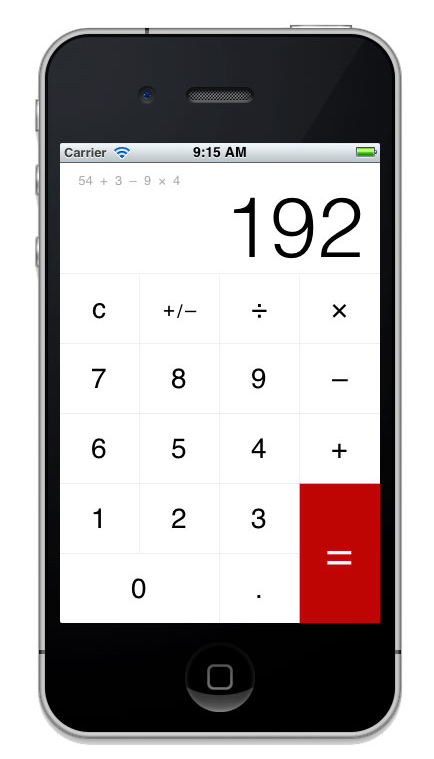
Solvetica is a minimal calculator for iPhone, that features gesture support, a calculation history and – of course – helvetica.
The app itself is only part of the story of course. I did this to get a feel for what it’s like to bring something to ‘market’ – where it appears that marketing something as ‘good design’ is just as important as actually designing it well. I’ll admit, the app took about 5 hours to make (most of that was making sure the interface was pixel perfect), but the supporting material took four times as long.
It included:
A logo and icon
iTunes screenshots
A marketing website (including a few iterations)
Seeing three things in a list here doesn’t seem like much, but getting these right involved multiple iterations, and I’m still not sure if they’re as effective as they could be.
Given the main purpose of releasing Solvetica was to learn about the app store and “what it takes” to get something released and released properly, I haven’t skimped on the time spent on these activities. I’m about to set up A/B testing on the marketing site to see what I can find. I’m paying close attention to app store rankings and correlating that to sales. I’m even trying a few marketing channels to see what gains it attention and what doesn’t. All of these will be valuable lessons when it comes to doing something more weighty next year.
I’ll be posting findings from these experiments as soon as I find anything interesting. In the meantime – check out Solvetica. It’s actually very nice to use!
There’s very little emotional intelligence designed into technology. Email software loves to remind you about how much you haven’t read; If you don’t login to Facebook for 2 days (only two!), it will start emailing you to tell you about all the “activity” you’re missing out on. Twitter also now sends you daily summaries of important things you may have missed. Whilst all of these are easily explained away as being “assistive” in some productive, getting-things-done kind of way, to me all it does is portray the neediness of these systems for your attention. They’re screaming at you to notice them.
What if there was a sense of emotional security built in to these technologies? What if they acted in a way that was confident you’d be back, and instead of screaming out at the slightest hint of neglect, terrified that you’ll leave them forever, they went about making the experience of coming back all the nicer?
Would you prefer a jealous service that sends you 10 emails a day asking where you are and who you’re with, or one that was confident and secure?
Sherry Turkle’s book, “Alone Together” is an interesting read if you’re interested in the increasing ambivalence and permission we give to attention grabbing technologies.
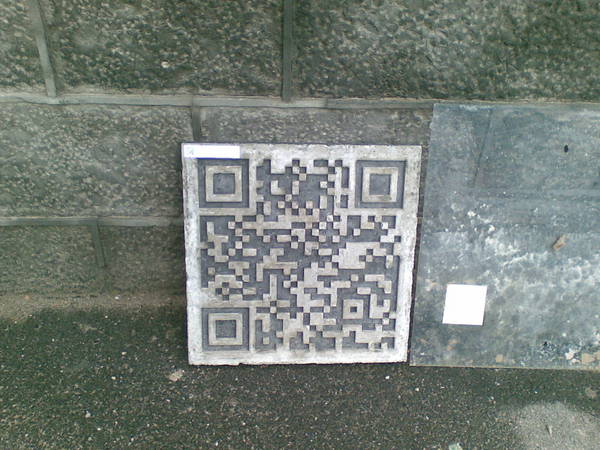
A few weeks ago, there was augmenting the new with the old – this week; the more likely trend of overlaying the old with the new. The installation of a QR code, made of stone, on a 150 year old building.
As computing moves into the environment, and becomes more invisible, how long will it be before QR codes are considered the equivalent of a modern day 50kg CRT monitor? and at some point will the eventual relic-code itself move from being a perceived “eye-sore”, to adding to the history of the building?
There’s variations of this quote floating around everywhere at the moment, but it doesn’t take a stretch of the imagination to come to the conclusion that something close to this figure is true.
All the data collected from year 0 to 2003 is the same amount of data we now produce in a week.
I’m not sure how this is being measured but I’m guessing it’s the amount of recorded output from humans over that time. Books, Newspapers, TV, Radio. Also, a common measurement is the amount of bandwidth the internet uses now compared to 10 years ago. Video is a monster.
It would be interested seeing the calculations behind these claims, but despite that, this huge increase in information lends itself to some questions:
– How much of it is “useful”? (and how do you even define “useful”?)
– How do we make sense of it?
– Should we even bother?
I’m inclined to think that all information is of use to someone, given the right interpretation and the right context. Given clarity of that context, some information just requires more abstraction than others.
What’s exciting to consider is what we’re now able to learn that we’ve never be close to knowing before.
All it would take is the right tools in the hands of the right people and some amazing insights could be made.