This is an archival copy of my PhD blog, which was active between 2009–2015. I'm publishing it again as a personal time capsule, but also because I think it's an interesting documentation of the PhD process itself, which might be useful to someone, somewhere. – Chris Marmo, January 2026
The last 6 months have been a whirlwind of writing, reframing, designing, and presenting as the deadline for my thesis submission approaches. I haven’t posted any of this new work here as it’s been such a dynamic process that I haven’t wanted to document it in public. However, a few weeks ago I was forced to finally update my abstract to reflect what the final incarnation of this research is likely to be. I’ve updated the abstract page, but to save you a click, here it is:
Ubiquitous Computing is a project within human-computer interaction that aims to embed computers into everyday spaces. As computing has moved away from desktop paradigms and is increasingly designed to operate ‘in the world’, the practice of ubiquitous computing has become heavily concerned with issues around space and place; particularly, with how technology fits in the relationship between people, space, and the understandings that bind them. Given the wider range of social and cultural contexts computational devices find themselves in, understanding the existing relationships between humans and their environments has become increasingly important to designers of technology. However, most of this research is centred around urban computing, conducted within cities, or focused on the mobility of urban dwellers. Indeed, little focus has been given to ubiquitous computing for non-urban environments.
This research expands the understanding of the relationship between technology and environmental understanding for ubiquitous computing. Through the case study of a national park, this thesis proposes new ways of thinking about designing technology that plays a role in the production of environmental understanding that moves beyond the typical focus on urban centres and mobility. It does so by drawing upon relational notions of space and understanding from cultural geography; examining how meaning of the world is socially and culturally produced and constructed. Building on this foundation, two multi-sited ethnographic studies with a state government organisation, Parks Victoria, are presented that demonstrate various productions of environmental knowledge in practice.
Based on analysis of these studies, a series of design principles are presented that reframe space and environmental understanding as emergent and seasonal processes. Drawing on these design principles, two design concepts are presented that are envisioned for use within Parks Victoria: Habitat, a location-based platform for tacit knowledge, and Wayfarer, a visualisation and narrative tool for situated understandings. A reflection on these related pieces of research will then serve to highlight new, practical directions for further work in ubiquitous computing in a non-urban context.
This is approximately the 10th version of my thesis abstract, and no doubt it will be tweaked even further in the coming weeks.There’s 30 days or so before my thesis is due, and I’m exciting about some of the new developments in it. Once I catch my breath I’ll be sure to post snippets of individual chapters here.
If you haven’t seen the news this week, there have been increasingly violent protests in Beijing over a territorial dispute between China and Japan about a set of small islands in the East China Sea. The two countries have a number of complicated historical tensions: the Japanese invaded and occupied China in 1931, and the anniversary of the invasion is in this coming week. I won’t go into detail on that, but you can read more about that piece of history, in the context of the current dispute, in this guardian editorial.
Whilst the dispute over the islands will continue to play out on the political and diplomatic level, what I found interesting were the territorial claims happening in digital space. The picture above was a ‘doodle’ on Chinese search site Baidu. Popluarised by Google, doodles on the American search site have generally been used to mark historically significant events, anniversaries, or tap into some timely global sentiment (as evidenced through the recent olympics).
However, Baidu’s doodle is asserting a territorial claim on real, tangible pieces of land. This isn’t the first time technology has been used as a tool in asserting views of geographical borders – google maps and google earth famously show different borders depending on the language you view them in. Viewing Tibet or Taiwan from a Chinese-language version of these products would tell a different story than viewing the US-English version, for instance.
In addition to the ‘doodle’ though, Baidu have set up a site that allows virtual flags to be placed on the archipelago, where over 2 million people have staked their claim on the land. All borders are, of course, constructed out of political, economic and social interactions; they are constantly shifting and negotiated. However, this is the first example i’ve come across where a country/organisation has essentially been able to crowd-source territory.
Maps and cartographic representations as technologies have been used for centuries to define borders, regions and territories. With this recent dispute, cartography finds itself in a new ‘landscape’ – one that is defined by the same real-time, socially driven technologies that are disrupting so many other industries and disciplines.
One of the research activities I conducted with Parks Victoria involved a mobile diary study. There are a couple of great introductions to the topic if you’re interested, but broadly; diary studies are a way of having participants reveal their daily practices through guided self-reporting. Mobile diary studies do this through the use of a mobile phone. The benefits of this: users typically already have a device, and these can be used to prompt participants for insights on their activites, real-time photos, etc.
In the context of my research, I opted to use a mobile diary study in order to gain an understanding of the practices of Park Rangers in relation to the places they manage. A mobile diary study seemed great for this as it allowed people to make entries whilst in the park itself – using the places and locations they work in and travel through as points of reflection. On top of this, the period during which the study ran was in the aftermath of a severe flood, and the recovery effort was worth investigating.
This post is about how the activity revealed more about their practice than I had released it would. What it highlighted was the deep connections people had to areas of the park – and how different these connections were for each individual participant. It is these connections that revealed a personal geography of the park; a type of mental map of the park that was emotive and subjective rather than abstract and representational.
Study Design
The dairy study was run using Evernote on a set of iPhone 3GS’s. Six rangers at Wilson’s Promontory were asked to participate, and their roles were carefully chosen in relation to their level of experience in the park, their typical duties, and the length of time they had spent in the park. I met with each participant in person to talk them through the use of the application, and to set up the expectations for the study. I also left a cheat sheet with them, detailing some “entry inspirations” that doubled as guidance on the types of entries I was looking for.
As you’d expect, we did some practice entries in our kick-off session, and I was careful to voice the usual reassuarances: there’s no right or wrong; even what you think is boring is interesting to me, etc.
Using Evernote was beneficial in a lot of ways. Originally I had planned on making my own diary study tool, and whilst Reuben and I managed to produce a working prototype, we abondoned it due to the difficulty in synching the data. Evernote’s built in web service was fantastic during the study as I was able to monitor entries in real-time. Each of the phones had a data allowance, and Evernote was set to automatically upload new entries as they were made. At the end of each day I would check what had been entered by each participant, and this was a great way of monitoring progress.
Feedback and encouragement was typically sent every 1 or 2 days via SMS to the study phone, and I have no doubt that this had a positive effect on the outcome of the study. In total, there were over 90 geo-tagged and time-stamped entries comprising of audio, video and photography – a very rich account of what had happened during and around the flood recovery.
Revealing personal geographies
Rather than thinking of the Park as a single geographical space, it can be thought of as a combination of different productions of space, including individuals unique interpretations of it. This implies that what is defined as a “park” is a multilayered entity that is constructed out of a number of different perspectives. This ‘relational’ notion of a space is grounded in cultural geography, but has recently begun to appear in human-computer interaction and design generally.
By asking people to carry the phone with them, it revealed the importance people placed on certain locations in the park; it helped reveal a participant’s subjective experience of the park. Each participant’s collection of diary entries provided one slice out of many that contribute to the Park’s overall meaningfulness. This ‘slice’ is what I’m defining as a personal geography here.
It showed/created a narrative for each participant as they moved through the flood recovery – their personal geography showed how certain areas in the park loomed large for them. By recording their movements and thoughts, it gave insight into their park, whilst also providing an enduring record of the historical event of the flood.
Evernote’s API allowed me to plot out their movements throughout the study period, but also to augment those movements with recorded media. These narratives formed a type of qualitative map – a “personal geography” that represents the relationship between that person and the park, during a particularly severe natural event. You can see some very basic results from this is olderblog posts.
Forming Histories
The goal of the study was to gain an insight into the daily practices of park rangers. As such, participants were asked to talk about details of their days they went about it. Unsurprisingly then, most entries were topical and timely to the day they were recorded; they were about difficulties encountered, conversations had or in some cases, were even notes to the participant themself for a later time. However, a number of entries were reflective and interpretive in nature.
What this highlighted was that certain staff desired a platform to share an interpretation of places filtered through their experience. They were reflecting on locations in-situ, and when asked to talk about those places, they began interpreting them in relation to current and past events and their own experiences working within them – particularly reflecting on what had changed over time. They were recording a history of that place that was tinged with their own lived experiences of it: the diary study (end evernote) were their platform, and the place itself was a tool for reflection.
A picture that was used to supplement an oral history
Most of these reflective entries were oral in nature, however they were supported by photos in some cases. What the diary study provided participants with was a platform for constructing oral histories. They were providing new knowledge about and insights into the past through an individual biographical account, and these accounts represented an interplay between the past and present, the individual and the social. Boiled down to its essence, what rangers were doing was performing an act of memory.
So, inadvertantly, by giving rangers a tool to report about their day, what actually occured was something deeper: it acted as a prototype of a system that allowed them to construct histories.
Research methods as systems prototyping
This surprising use was evident all through my research, not just with the diary study. More on that another time – I wanted to write this here to highlight (first) that Evernote is a fantastic tool for conducting mobile diary studies, and (second) that clever incorporation of technology in the design of your research (as very different to interface design!), can provide you insights and inspirations for future designs of actual systems.
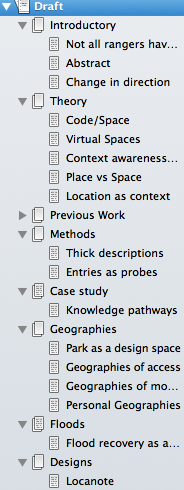
As an activity today I went through this blog and conducted a card sort on the posts. What emerged from it was a rough outline of my overall thesis (and the realisation that I’ve written many more words than I had originally thought). There is a lot of manipulation to get these words into a submittable form, but this quick glance through has netted me close to 15,000 of them. This is minus any of the notebook content and thinking I’ve done, my notational velocity library, formal papers (6+), and various documents written around my case study and methods.
I’m feeling better about finishing by September now. More importantly, this exercise has given me the start of a document that has an concrete outline, and will slowly evolve into a finished thesis.
To curb off a bit of the ol’ thesis anxiety, I thought I’d make a list of things-I-did this year. In no particular order, here are the things I liked (and possibly didn’t) this year.
Writing/Talking
My university (and supervisor) are great at encouraging and pushing their graduate students to write and publish their work. This year was no different, with a couple more publications to add to the list:
A paper for The International Cartographic Consortium conference around context-awareness in visualising geographical information. Presented in Paris, in July.
Doctoral Consortium paper for Mobile HCI. Presented in Stockholm, in September.
A book chapter in an upcoming RMIT publication around future social contexts of Geovisualisation.
Full paper for the LBS 2011 conference. Presented in Vienna, in November.
A visit to ARSyd to talk about how we make sense of location based data.
I also submitted a paper to CHI, which I thought was a bit ambitious of me. I was right – The paper wasn’t accepted, but neither were 77% of the others.
Mobile HCI
For me, probably the most exciting and fulfilling thing that happened this year was the trip to Stockholm, to participate in the doctoral consortium at Mobile HCI. I received amazing feedback, and left feeling encouraged (and validated!) in my take on my topic area. I also met many, many amazing people, including those at the MobileLife research centre, fellow PhD sufferers whose work I admire, and people I know I’ll be friends with for a long, long time. This is one of those things that you can’t help but gush about – but I’ll save you from more of that.
Apple’s WWDC
In June I attended Apple’s developer conference in San Francisco. I learnt quite a bit, but the most inspiring thing was seeing so many independent designers and developers working on things they love, and not starving during the process. I traveled with Reuben, who I highly recommend to anyone needing to share a hotel room. He doesn’t snore.
Paris
I had the opportunity to stay in Paris for the entire month of July – a week for the ICA conference, with three weeks tacked on to the end. Again, I met some great people and has some very interesting discussions about my work. I also rented a small apartment in Belleville, and worked on my french accent a little more. Weh.
Misc (or: stuff that doesn’t sound as cool).
After another year of “being a PhD student”, I feel like I’ve learnt some valuable lessons about how to be one of these wretched creatures. Particularly, I’d like to point out a few things about having a research question and involving others in your work:
Let the data speak for itself. Do not try to shoe-horn your research into your own pre-designed agenda. When you first start something like a PhD, you can often get excited (and overwhelmed) by the number of possible directions you might take. Of course, you then choose one of them – generally something you really like, or care about. In a beautiful twist of fate, you eventually learn that you can’t choose what you observe. Research is cyclical, and you need to pay attention to what your data is telling you at all times. Your research won’t always be what you thought it would be.
You need time. About half way through the year I stopped working completely, and became an actual full-time student. Granted, it was the “working” part that eventually allowed me the freedom to do this, but clearing my plate of all other commitments was one of the best decisions of the year. You need to be fully immersed in a research thesis, and even small, one day a week commitments can be distracting. You might lose a little bit of industry experience, but you’ve got the rest of your life to get that.
Talk to people. Some of the best ideas and advice I’ve received have been in casual conversations with people in similar situations to me. At a pub. In a cafe. In a national park. Having a whinge every now and again is very important, but you should always take up any opportunity to speak about what you’re doing. Even if it leaves people utterly confused, hearing yourself explain something in a slightly different way will often spark new and exciting leads to follow up on. It also gets you out of your stuffy office, and highlights the value and importance of communicating your work effectively.
2012
Next year is my final year (hopefully), but I’m excited to see where it takes me. There probably will be a few less international sojourns, but I’m looking forward to producing a semi-decent thesis and beginning to explore where that might take me.
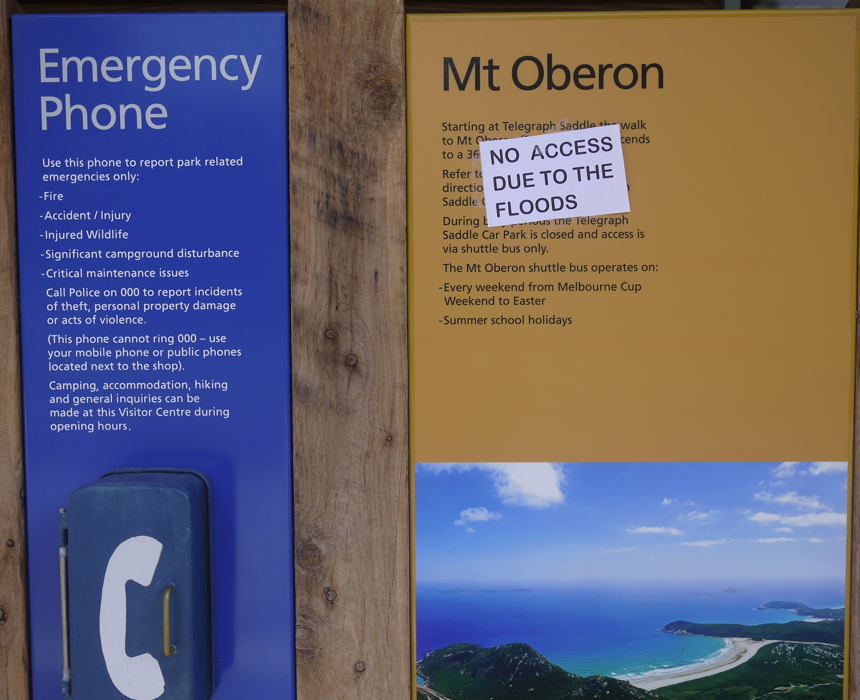
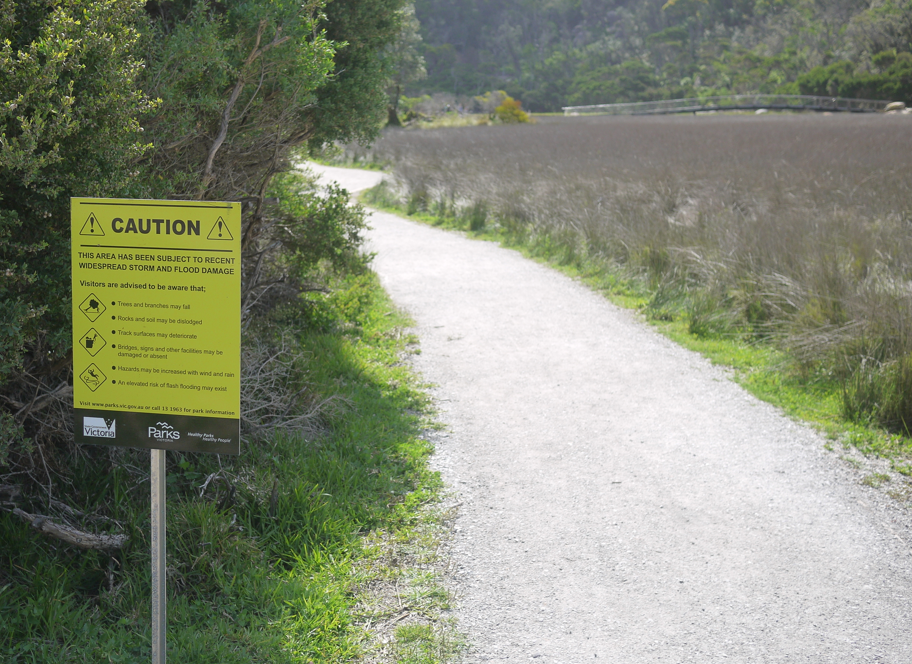
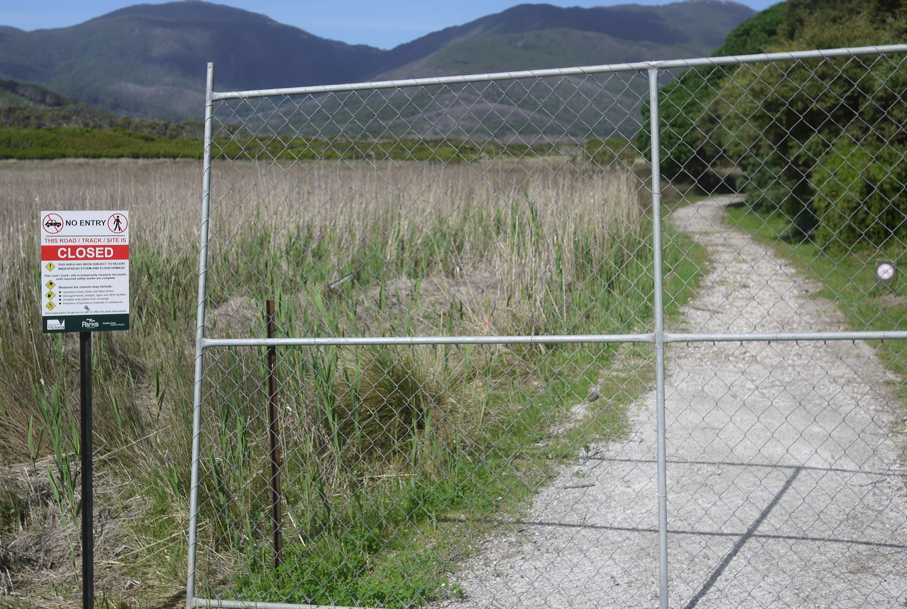
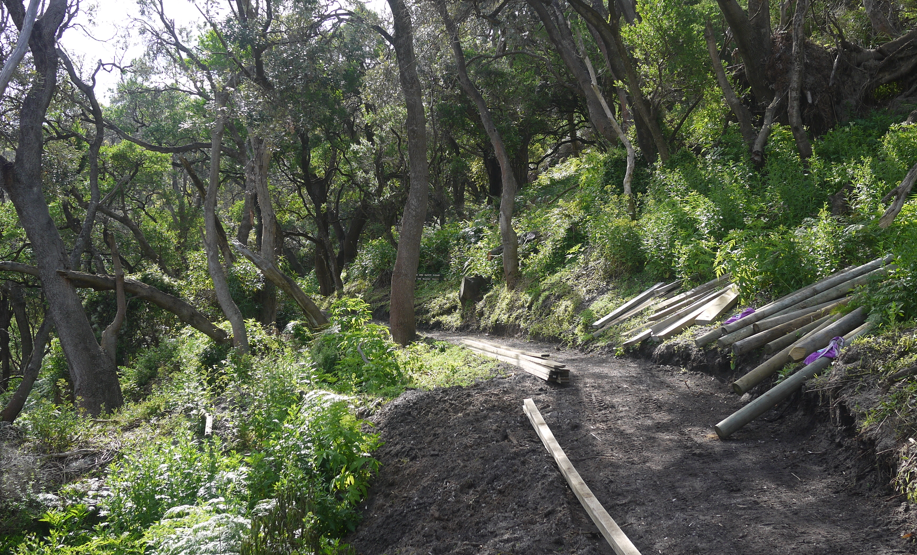
Whilst the park is open to visitors, issues of access and accessibility are still persistent. These images above are taken mainly in “tourist” areas, with the signage communicating to the public. However, the issues are present for everyone: people can’t get to where they were able to previously.
How is this effecting the information being collected in the park? Monitoring equipment has been disrupted, and simply can’t be gotten to. At the same time, the focus of work has shifted from ecological management to getting visitor infrastructure back up to scratch. The flood has been a hugely disruptive event that has changed how people (both public + rangers) interact with the park – and therefore, their understanding of it.
The space of a flood recovery is very different to that of normal park management. The rangers are still in that space.
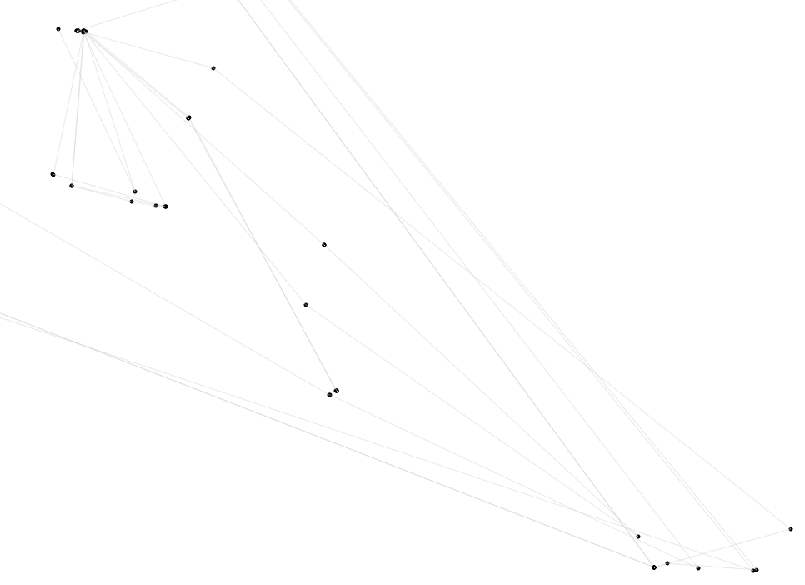
Over the last few months I’ve conducted a mobile diary study with rangers at the study site, Wilson’s Promontory National Park. Six participants were asked to record a number of entries as they went about their daily activities: a) Things they wanted to show other people, b) interesting observations for themselves, and c) recollections of a past experience, amongst others. Analysing the qualitative contents of these entries has revealed much about the connections between Parks Victoria staff, the park itself, and their tools and technology. At the same time, I’ve been doing some programmatic/quantitative analysis of the entries – mainly, the combination of timestamps and the attached location data.
I’d like to give a quick overview of some of the early findings of the study. Before that though, it’s worth talking a little about movement, and how this has come to be understood as a key source of environmental understanding.
Movement is knowing
Movement and mobility are becoming key concerns in the areas of sociology, human geography and ubiquitous computing. The sociologist John Urry (2006) suggests that mobility – the flow of information, people, and goods – rather than fixed societies will be a key concern for sociologists this century. Similarly, in human geography the notion of unblocked space (Thrift, 2003) is one concerned not with fixed points, but with movement and flows through these spaces. Thrift argues that space should be viewed not as a boundary around these flows, but as the flows themselves. In this sense, movement through a space is the definition of it.
The synthesis of these and other theories are starting to inform elements of ubiquitous computing research. Distinctions between “space” and “place” have been used by CSCW researchers as a means of separating a “socially constructed” place, and the objective space for some time. By focusing on flow and mobility, researchers now to also view space as a social construct. As such, it’s possible to argue that our environmental understanding is tied up in our constructed notions of space. Bidwell et al. (2011) demonstrate this by looking at rural knowledge traditions in Africa which are often explained as spatial relationships. Brewer & Dourish (2008) similarly present cultural accounts of space, and highlight that much of our technology relies on assumptions about how we interact with our environment.
Both of these papers discuss spatial relationships in the context of knowledge, and highlight ways in which technology may be better designed to more closely match different conceptions of space.
The acts of Rangers
Ranger’s work is to manage the park; they do this through interacting with it, and it is through these interactions that they produce knowledge. The diagram above shows where diary entries were made (with a dot), but also the path they took between entries. Most entries were reports of things that happened between the last entry and the current one. This means that much of what rangers thought to be important happened on the lines – that is, in their movement between places. Keeping with the notions of flow and mobility mentioned above, the lines can be viewed as the space of the park, as enacted by the rangers. These abstract dots and lines, for them, are one way of representing the park as they act in it.
This picture also obviously emerges a sense of “hubs” – areas where rangers go back to, and move between commonly. I’m guessing most people familiar with the park will be able to pick out where these areas actually are based on this diagram. It’s these places where knowledge “from the field” is primarily shared, interpreted and enacted upon.
The lines going off the screen also indicate that the management of the park occurs not just in the park – the “geography of management” includes administration hubs in the city and surround areas of Gippsland. Whilst this image is centred on the (invisible) geographic area of the actual park, a significant portion of entries occur “off site”. The park is just one place in the network of movements and actions carried out by rangers.
There’s a lot more to say around this study. As I start writing the thesis chapter I have planned, I’ll keep posting refinements. In the meantime, enjoy the reading below!
References
Bidwell, N. J., Winschiers-Theophilus, H., Koch Kapuire, G., & Rehm, M. (2011). Pushing personhood into place: Situating media in rural knowledge in Africa. International Journal of Human-Computer Studies, 69(10), 618–631.
BREWER, J., & Dourish, P. (2008). Storied spaces: Cultural accounts of mobility, technology, and environmental knowing. International Journal of Human-Computer Studies, 66(12).
Thrift, N. (2003). Key concepts in geography.
Urry, J. (2006). The new mobilities paradigm. Environment and Planning A.
It’s a common story that the focus of a PhD changes dramatically as you progress through it. In almost two years I think I’ve written about 10 different abstracts, all with some kind of common thread but with decidedly different implications for the activities and outcomes of the project. In that spirit, I’d like to post another abstract!
This one I think pulls together a lot of the thoughts I’ve had over the last few months and gives me a bit more direction (which hopefully will translate in to more frequent posts here). No doubt there’ll be more versions, but for now this is what is making sense to me.
This thesis expands the understanding of the relationships between technology, people and environmental knowledge.
Our understanding of the environments we inhabit have always been socially grounded; the interactions we have with a space define it, and the meaning we construct about these places is socially embedded. As technology becomes increasingly mobile and ubiquitous, it too has become socially embedded. People are connecting across time and space, and real-time access to vast amounts of information are changing the ways we interact with the world in tangible ways. The spaces we inhabit are at once physical, social and digital – they are blended.
There has been much research into the potential for technology to facilitate collaboration and co-presence, and around the ways technology use and infrastructure influences our perceptions of and movements in the world. However, there has been little that looks at the combination of both: how we can co-create an understanding of our environment that crosses the seams between physical and digital spaces.
Through an ethnographic study of rangers in a national park, this thesis will build upon the current research around environmental knowing and its implications for ubiquitous and mobile computing. It will provide exploratory designs for two different systems that demonstrate blended space for the purpose of sharing local knowledge about the environment, and will discuss the potential for digital space to enrich this knowledge. This thesis argues that by decreasing the divide between physical and digital spaces, we can facilitate and enrich our understanding of the locations we interact with.
Personal geographies is a term I’ve been using in (thus far private) writing and preliminary analysis of diary studies and interviews I’ve conducted with park rangers. The above picture is the result of combining a particular kind of personal geography – jogging trails through New York city. It’s also an increasingly common type of visualisation; the visualisation of movement to emerge the shape of a space. Twitter heat maps and flickr overlays are also in vogue (not that that’s a bad thing!). The best thing about personal geographies is that, when combined, they form social geographies; the sense of place that has arisen through a community’s interaction with the city. What the visualisation above shows is a particular interpretation of a place, and one that was not necessarily deliberate.
This is also another example of digital data imposing itself on the physical world – it’s becoming increasingly easy to access the data in the digital layer above us. The seams between digital and physical are blurring too; as this example shows, our physical being in the world increasingly generates digital data, without consciously creating “content”. Conversely, the act of deliberate “generation” of content can influence our physical space and the actions we take in them. At the most basic level, think foursquare check-ins influencing which bar you go to.
We’re already living in a hybrid physical/digital world – and they’re increasingly influencing each other in ways designed or not. In fact, the duality of physical and digital may be a generational divide – in 100 years (less?), it will most likely sound comical to separate the two.
It’s been a bit of a black hole on this blog recently – the promise of posting “essays” every few weeks scared me away from posting anything at all. I’ve been doing writing, but nothing that is ready for public consumption just yet. There will be writing published, but not for a few more weeks.
Over the past month I’ve been busy collecting data for my first case study, and a few days ago I arrived in San Francisco for WWDC, the Apple developer conference. I’m working on designs for a qualitative analysis tool for iOS devices, which I hope to build some interactive prototypes with while I’m here. The conference has a UI Lab with Apple designers, who critique your designs, and a few hands-on technical sessions around maps, visualisations, etc, which I’m hoping to apply to some prototypes.
This trip is the first of a few over the next few months – in July I’m presenting a poster and participating in a workshop on Geovisualisation at the ICA Conference in Paris, and in late August I’m heading to MobileHCI to participate in the doctoral consortium. “Excited” is an understatement!
So, I hope you can forgive the lack of content here recently. Normal programming will resume soon, now that I have this essay-monkey off my back.